





What's Happening?
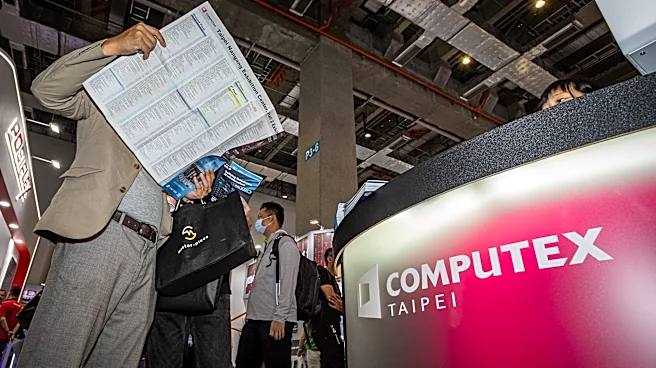
The 2026 AVEVA Taiwan Technology Summit, held in Taipei, focused on accelerating industrial intelligence and shaping the future of industry. The event highlighted the growing adoption of AI in industrial operations, particularly in Taiwan's traditional
manufacturing sector. Surveys presented at the summit indicated that 38.5% of traditional manufacturing companies in Taiwan are either in the 'Ready AI' or 'Scaling AI' stages, though only 15.4% have achieved scaled application. A broader survey showed 69.0% of manufacturers have adopted, are evaluating, or are planning AI initiatives, with process automation, IoT, and smart production being key application areas. A central theme was the necessity of a connected and trusted data foundation to move AI from isolated pilots to stable, repeatable outcomes. AVEVA emphasized its CONNECT industrial intelligence platform and PI Data Infrastructure, which integrate shop-floor and enterprise-level data, and plans to introduce an industrial knowledge graph and digital twin authoring tools in Q1 2027.
Why It's Important?
This summit's insights are crucial for U.S. manufacturing as they underscore the global challenges and strategies in deploying industrial AI. The data from Taiwan, a significant player in global manufacturing, reflects a common hurdle: moving AI from pilot projects to scaled, impactful applications. U.S. manufacturers face similar issues with fragmented data systems and the need for robust data foundations to fully leverage AI's potential. The emphasis on digital twins and integrated data platforms by AVEVA provides a blueprint for U.S. companies seeking to enhance operational efficiency, predictive maintenance, and overall smart manufacturing capabilities. Understanding these global trends and technological solutions can help U.S. industries remain competitive and accelerate their own digital transformation journeys.
What's Next?
The next phase for industrial AI adoption, as highlighted by the summit, will focus on shortening the distance between pilot projects and scaled applications. AVEVA's planned introduction of an industrial knowledge graph and digital twin authoring tools in early 2027 aims to facilitate this by mapping existing data sources to standard models and retaining data lineage. This will enable faster access to usable data for analytics, simulation, and AI workflows. For U.S. manufacturers, this suggests a continued push towards integrated data platforms and digital twin technologies to unlock the full potential of AI. Collaboration across organizational boundaries and clear data governance will also be critical for successful scaled deployment.
Beyond the Headlines
The summit's discussions reveal a deeper challenge beyond technology: the organizational and cultural shifts required for successful AI integration. The fragmentation of data across various systems (HMI, SCADA, MES, historians) and different teams highlights a systemic issue in many manufacturing environments. The concept of 'industrial intelligence'—innovating with intelligence rather than just collecting data—points to a need for a holistic approach that connects engineering, production, maintenance, and management teams. This implies a significant investment not just in technology, but also in training, change management, and fostering a data-driven culture. The ethical implications of AI in decision-making, particularly in critical industrial processes, also become more pronounced as AI moves towards scaled deployment, necessitating robust governance and accountability frameworks.