









What's Happening?
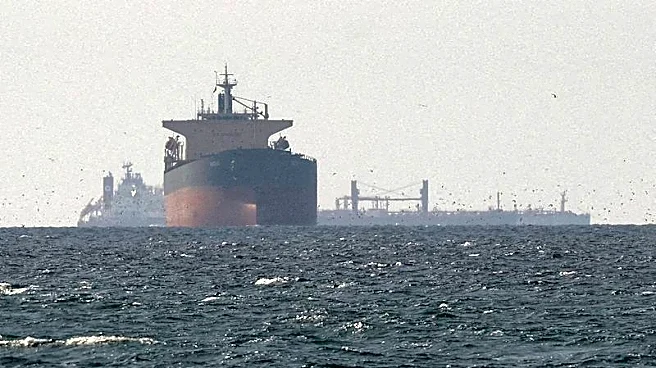
Gold and silver prices have increased significantly following a framework deal between the U.S. and Iran to reopen the Strait of Hormuz. This agreement has led to a decrease in crude oil prices, easing inflation risks and softening the U.S. dollar. Spot
gold is trading near $4,336.20 per ounce, up 2.79%, while spot silver is up 4.07%. The deal is seen as disinflationary, benefiting rate-sensitive sectors and reducing the safe-haven premium on gold. The market is also reacting to economic data, including the New York Fed's Empire State manufacturing index, which showed slower activity in June.
Why It's Important?
The reopening of the Strait of Hormuz is a significant geopolitical development that impacts global oil supply and prices. The reduction in oil prices can alleviate inflationary pressures, which have been a concern for central banks and investors. This development may influence the Federal Reserve's monetary policy, as lower inflation could reduce the need for aggressive interest rate hikes. The situation highlights the impact of geopolitical events on financial markets and the importance of monitoring such developments for investors and policymakers.
What's Next?
The market will be closely watching the Federal Reserve's upcoming policy meeting for any changes in interest rate expectations. The durability of the U.S.-Iran agreement and its impact on global markets will also be monitored. Investors will be looking for further developments in the U.S.-Iran relations and their potential impact on oil prices and inflation. Additionally, economic data releases, such as industrial production and capacity utilization, will provide further insights into the economic outlook.