






What's Happening?
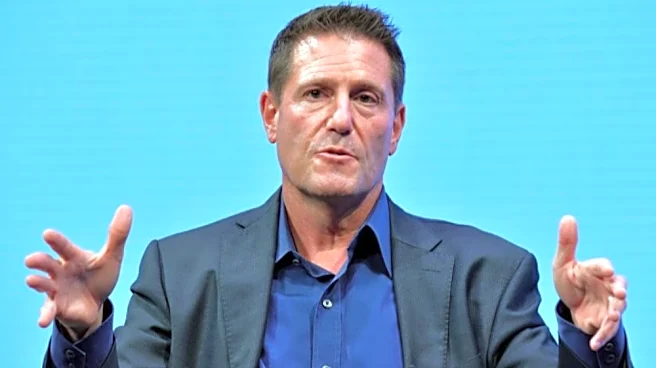
Kevin Mayer, co-founder of Candle Media, stated at Doha Industry Days that the 'urge to merge' within the media industry is expected to continue for several years. Mayer, who previously oversaw Disney's acquisition of 21st Century Fox in 2019 and was
involved in deals for Pixar, Marvel, Lucasfilm, and BAMTech, highlighted that the current trend of consolidation is driven by a lack of revenue growth across the sector. He specifically referenced recent mergers, including Skydance's, as examples of this ongoing process. Mayer also mentioned Candle Media's investment in Reese Witherspoon's Hello Sunshine, indicating a strategic approach to content acquisition within this consolidating landscape. His remarks suggest a fundamental shift in the media industry's economic model, where growth through acquisition becomes a primary strategy in the absence of organic revenue expansion.
Why It's Important?
This prediction from a prominent media executive like Kevin Mayer signals a significant period of restructuring for the U.S. media and entertainment industries. Stalled revenue growth means companies will increasingly look to mergers and acquisitions to achieve scale, reduce competition, and find new efficiencies. This trend could lead to fewer, larger media conglomerates, potentially impacting content diversity, pricing for consumers, and opportunities for independent creators. For investors, it suggests a volatile market with potential for both high-value acquisitions and significant divestitures. Smaller companies, like Reese Witherspoon's Hello Sunshine, might find themselves attractive targets for larger entities seeking to bolster their content libraries or reach specific demographics. The consolidation could also influence advertising markets, as larger entities command greater negotiating power and broader reach.
What's Next?
The media industry can anticipate a continued wave of merger and acquisition activities in the coming years, as companies grapple with stagnant revenue. This will likely involve both horizontal consolidation (merging with direct competitors) and vertical integration (acquiring companies at different stages of the production or distribution chain). Regulatory bodies in the U.S. will face increased scrutiny regarding antitrust implications of these large-scale mergers, potentially leading to more rigorous reviews and conditions for approval. Companies will also need to focus on integrating newly acquired assets effectively to realize the intended synergies and avoid cultural clashes. Consumers may see changes in how content is bundled and distributed, as consolidated entities seek to maximize subscriber value and minimize churn. The emphasis on strategic acquisitions, particularly of content-rich companies, will remain a key driver.
Beyond the Headlines
The underlying cause of this 'urge to merge'—stalled revenue growth—points to deeper structural challenges within the media industry, possibly driven by evolving consumption habits, increased competition from streaming services, and the saturation of traditional advertising markets. This consolidation could lead to a more concentrated media landscape, raising concerns about media pluralism and the potential for a narrower range of voices and perspectives in content creation. The focus on acquiring established brands and talent, such as Hello Sunshine, highlights the value placed on proven intellectual property and audience engagement in a fragmented market. This trend might also accelerate the shift towards subscription-based models and direct-to-consumer strategies, as companies seek more stable and predictable revenue streams in an increasingly competitive environment.