








What's Happening?
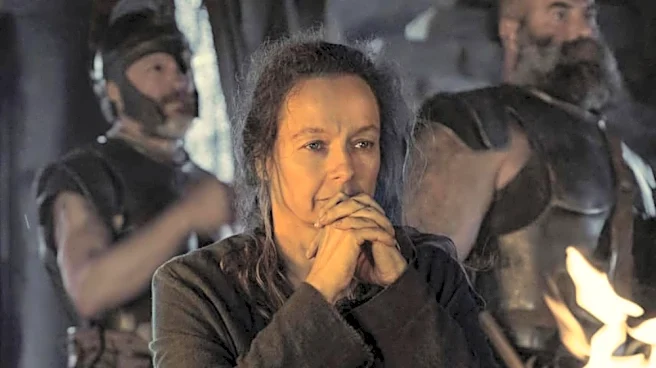
Samantha Morton, known for her role as the sorceress Circe in Christopher Nolan's film 'The Odyssey', has received significant acclaim for her performance. Before her acting career took off, Morton worked as a magician's assistant, a role she took on as a teenager
after joining Nottingham's Central Junior Television Workshop. Her experience in magic and transformation played a pivotal role in her portrayal of Circe, a character who turns Odysseus' men into swine in a sequence that blends horror and practical effects. Morton's performance was so impactful that it prompted an unusual reaction from the film crew, who applauded her after one take. This reaction was likened to the response Heath Ledger received during his portrayal of the Joker in 'The Dark Knight'.
Why It's Important?
Morton's portrayal of Circe in 'The Odyssey' highlights the intersection of past experiences and current roles, showcasing how her early work in magic influenced her acting. This performance not only underscores her versatility as an actress but also brings attention to the broader themes of women's experiences during wartime, as depicted in Nolan's adaptation. The film's reception and Morton's standout performance could influence future casting decisions and storytelling approaches in Hollywood, particularly in films that explore complex female characters. Additionally, the comparison to Heath Ledger's iconic role underscores the potential for Morton's performance to leave a lasting impact on audiences and critics alike.
What's Next?
Following the success of 'The Odyssey', Samantha Morton may see increased opportunities in roles that require a blend of physicality and emotional depth. The film's reception could also lead to further discussions about the portrayal of women in historical and mythological narratives, potentially influencing future film projects. As audiences and critics continue to respond to Morton's performance, there may be a renewed interest in exploring similar themes in cinema, particularly those that challenge traditional villain archetypes and highlight the nuanced experiences of women.