






What's Happening?
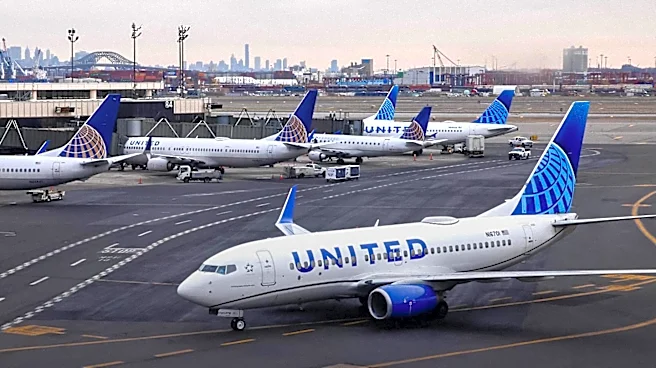
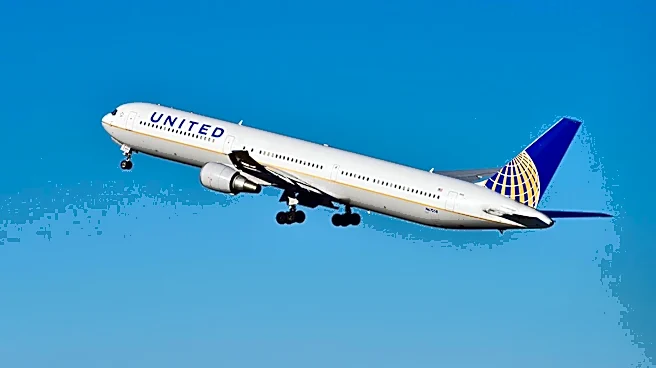
Scott Kirby, CEO of United Airlines, has publicly stated that Miami International Airport (MIA) would be his preferred choice for developing a new hub to strengthen the airline's presence in South America. Despite United already possessing one of the most
extensive international networks among U.S. airlines, Kirby identified South America as a particular weakness. He noted that Miami's geographical location, large local market, and historical role as a connection point between the U.S., Latin America, and the Caribbean make it uniquely advantageous. Currently, United primarily uses Houston as its gateway to Latin America and supplements its regional presence through partners like Copa Airlines, Avianca, and Azul. However, establishing a hub in Miami would allow for a more powerful platform specifically oriented towards South America.
Why It's Important?
United Airlines' interest in Miami highlights the growing strategic importance of the city as a business and aviation hub for the Americas. A major United hub in Miami would introduce significant competition into a market currently dominated by American Airlines, potentially altering flight connections and pricing between the U.S. and South America. This move could also further solidify Miami's status as a financial, technological, and corporate center for international companies managing Latin American operations. For travelers, increased competition could lead to more flight options and potentially lower fares. For the airline industry, it signals a strategic battleground for market share in the lucrative South American travel corridor.
What's Next?
While United Airlines CEO Scott Kirby has expressed a strong desire for a Miami hub, the realization of this ambition faces significant hurdles. Kirby estimates that United would require approximately 40 to 50 gates to establish an operation of the necessary magnitude. A substantial portion of the available capacity at MIA is currently controlled by American Airlines, which holds a dominant position. Therefore, while the declaration signals a strategic ambition, it is not an immediate project. Future developments would depend on United's ability to secure the necessary gate access, potentially through negotiations with airport authorities or other airlines. The statements, however, underscore Miami's increasing value in the broader economic landscape of the Americas.
Beyond the Headlines
The pursuit of a Miami hub by United Airlines reflects a broader trend of airlines seeking to optimize their network strategies to capitalize on growing international markets. This move is not just about adding routes; it's about establishing a strategic foothold in a region with significant economic and cultural ties to the U.S. The challenge of securing gates in a highly competitive airport like MIA also highlights the infrastructure constraints faced by major U.S. airports and the power dynamics within the airline industry. Beyond aviation, Kirby's comments reinforce Miami's evolving identity from a tourism-centric city to a pivotal business and logistical gateway for the entire American continent, attracting major corporate interest across various sectors.