





What's Happening?
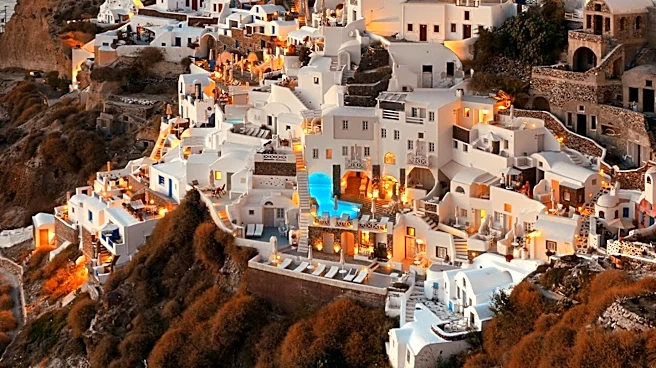
Santorini, a Greek island renowned for its whitewashed houses, blue-domed churches, and caldera views, provides a range of activities from exploring traditional villages and coastal walks to boat trips along its volcanic coastline. The island's appeal
varies significantly with the season; mid-June and September offer warm weather suitable for swimming, while late October provides a quieter experience with fewer crowds and comfortable temperatures for exploration. Visitors can choose from various accommodation options, including the bustling Fira, the quieter Imerovigli with caldera views, or more affordable inland villages like Pyrgos. Transportation on the island includes buses, rental vehicles (cars, scooters, ATVs), and taxis, with buses being the most economical option, though they primarily route through Fira. Renting a car offers the most flexibility for exploring less accessible areas.
Why It's Important?
The detailed insights into Santorini's seasonal variations and accommodation choices are crucial for travelers planning a visit, allowing them to tailor their trip to specific preferences regarding weather, crowd levels, and budget. The information on transportation options helps visitors navigate the island efficiently, whether they prioritize cost-effectiveness with buses or flexibility with rental vehicles. Understanding the distinct characteristics of villages like Oia (popular but crowded and expensive), Fira (lively and central for transport), and Imerovigli (quieter with spectacular views) enables informed decisions on where to stay. This comprehensive guide helps manage expectations and enhances the overall travel experience by highlighting the trade-offs associated with different choices, from peak season crowds to off-season closures.
What's Next?
Travelers planning future trips to Santorini can utilize this information to strategically book their visits, considering the optimal time for their desired activities. Those seeking warm weather and swimming opportunities will likely target June or September, while those prioritizing exploration and fewer crowds might opt for late October or April. The guidance on accommodation suggests that splitting stays between different types of villages could offer a balanced experience, combining luxury with affordability. Furthermore, the emphasis on booking restaurants and tours in advance, especially during high season, indicates a need for proactive planning to secure desired experiences. The continuous availability of direct flights from various European cities during the main tourist season will likely continue to facilitate access to the island.
Beyond the Headlines
The detailed breakdown of Santorini's travel dynamics underscores a broader trend in popular tourist destinations: the increasing need for nuanced planning to avoid over-tourism and maximize personal enjoyment. The advice to consider less popular times or areas, such as inland villages, reflects a growing desire among travelers for authentic experiences away from the main tourist hubs. This also highlights the economic impact of tourism on local communities, where businesses adapt their operations to seasonal demand. The emphasis on responsible travel, such as choosing appropriate transportation and being mindful of local infrastructure, points to an evolving consciousness among travelers to minimize their footprint while maximizing their cultural and recreational engagement with the destination.