




What's Happening?
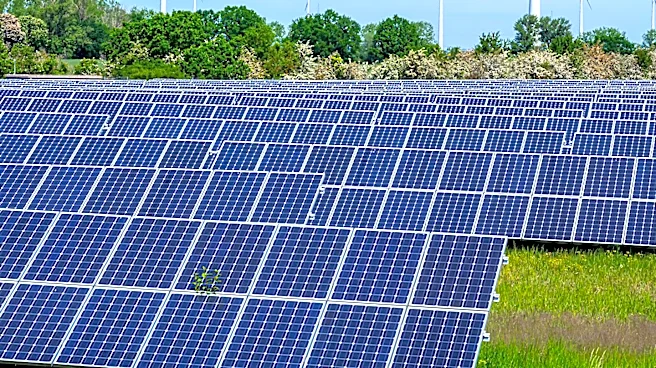
Meta has entered into a significant power purchase agreement for the Starling Solar project in Texas, which will provide 144 megawatts of solar energy. This agreement allows Meta to claim all environmental attributes from the solar production, helping
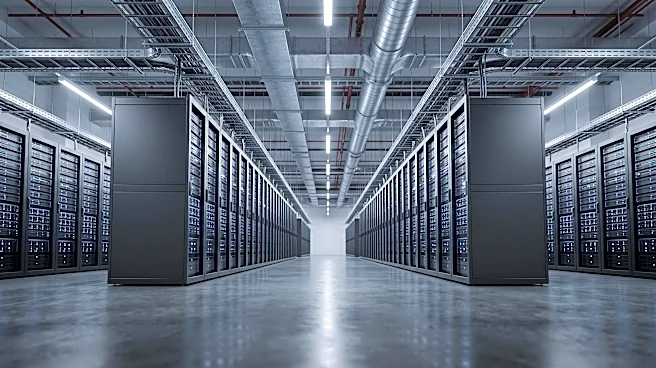
to offset the gas-fired energy powering its data centers. The Starling Solar project, developed by Apex, would not have been built without Meta's backing. This move comes as Meta is rapidly expanding its portfolio of energy-intensive data centers, with 28 sites across the United States as of April. However, the company recently exited a corporate renewable energy initiative after a decade of membership, raising questions about its long-term commitment to renewable energy. Despite this solar purchase, Meta also plans to power a new data center in El Paso with a 366-megawatt gas-fired plant, indicating a mixed approach to its energy sourcing.
Why It's Important?
Meta's strategy highlights the growing tension between the escalating energy demands of artificial intelligence (AI) data centers and the push for renewable energy. While the solar purchase demonstrates a commitment to clean energy, the continued reliance on natural gas for other data centers suggests a pragmatic approach to meet immediate power needs, which some critics describe as 'taking the easy way out.' The rapid build-out of AI infrastructure is placing significant strain on the U.S. power grid, particularly in states like Texas, which is experiencing record-high demand due to high temperatures and an influx of data centers. This situation has prompted Governor Greg Abbott to order an audit of all data centers awaiting grid connection in ERCOT, focusing on water consumption and efficiency. The balance between rapid AI development and sustainable energy practices is a critical challenge, impacting grid stability, environmental goals, and the cost of electricity for consumers.
What's Next?
The Starling Solar project is expected to generate $27 million in tax revenue and $26.3 million in landowner payments over its lifetime, along with creating 400 to 450 jobs during construction. This project will contribute to bolstering Texas's grid, which is under increasing pressure. However, the broader implications of Meta's energy strategy will continue to be scrutinized. The audit ordered by Governor Abbott will determine which data centers can connect to the Texas grid, potentially influencing future development and energy sourcing decisions for tech companies. Analysts like Dennis Wamsted suggest that while Meta has been active in renewable energy in the past, its current rapid expansion relies heavily on natural gas, raising concerns about the pace of AI development versus the speed at which renewable infrastructure can be deployed. The industry will likely see continued efforts to integrate renewables while also exploring other power sources to meet the insatiable demand of AI.
Beyond the Headlines
The case of Meta's energy procurement reflects a larger systemic issue within the tech industry: the immense and rapidly growing energy footprint of AI. The 'power wall' is becoming a significant constraint on AI development, pushing companies to explore diverse and sometimes contradictory energy solutions. This includes not only large-scale solar and gas plants but also innovative concepts like orbital solar power and on-site modular reactors. The public backlash against data center developments, often driven by concerns over energy consumption, water usage, and local environmental impact, underscores the need for greater transparency and community engagement. The challenge extends beyond simply generating enough power; it involves rethinking grid management, optimizing energy efficiency within data centers, and developing sustainable, scalable solutions that can keep pace with technological advancement without compromising environmental integrity or burdening local communities.