





What's Happening?
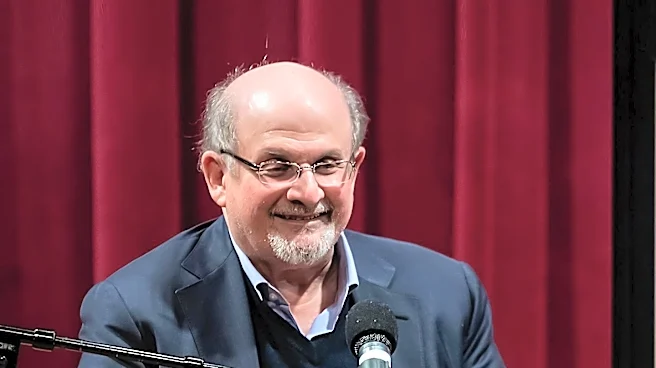
Author Adam Wilson recently discussed his new novel, 'Fail Sons,' which centers on a road trip involving a cryonically-frozen father. Wilson described the book as his tightest, funniest, and most moving novel to date, despite its 'midlife-crisis' themes.
The inspiration for the novel came from a 2014 road trip from Los Angeles to Denver and a residency in Woody Creek, Colorado. The book is set in the summer of 2022, allowing for the reverberations of the pandemic to be felt without it being the central event. Wilson noted that the fragmented structure and use of white space in 'Fail Sons' allowed him to move between the novel's present and past scenes without extensive transitions, a technique inspired by Mary Robison's 'Why Did I Ever.' He also incorporated themes of bodily functions and aging, aiming to portray a more vulnerable and less commonly explored aspect of men's physical experiences.
Why It's Important?
Adam Wilson's approach to 'Fail Sons' offers a significant commentary on contemporary American life, particularly the lingering effects of the pandemic and the challenges of aging. By setting the novel in 2022, he captures a period where the immediate crisis of COVID-19 has passed, but its societal and personal impacts continue to shape characters' lives, highlighting the diverse experiences of individuals during that time. His exploration of male vulnerability through physical ailments, moving beyond typical portrayals of heart problems or erectile dysfunction, contributes to a broader literary conversation about the human body and its inevitable decline. This nuanced perspective can resonate with a wide audience, fostering empathy and understanding of less-discussed aspects of the human condition. Furthermore, Wilson's discussion of plot versus concept in writing sheds light on the evolving landscape of literary creation and reader expectations, influencing how authors approach storytelling in a complex and rapidly changing world.
What's Next?
Adam Wilson expressed interest in adapting 'Fail Sons' into a film, should the opportunity arise, acknowledging the challenges of translating the novel's nuanced inner monologue to a visual medium. He noted that a screenplay would primarily capture the characters' spoken dialogue, requiring alternative methods to convey the protagonist Scott's depth and soulfulness. This potential adaptation could bring the novel's themes of family, loss, and the pandemic's aftermath to a wider audience, sparking further discussion and engagement with the story. Additionally, Wilson continues to explore new writing projects, aiming to find fresh and unfamiliar ways to write about parenting that capture profound truths about millennial parenthood. His ongoing work suggests a continued focus on contemporary social issues and personal experiences, promising further contributions to modern American literature.
Beyond the Headlines
Wilson's candid discussion about the evolution of his writing process over three decades, particularly the shift from a quiet, internet-free environment to a busy, distraction-filled one, highlights a broader cultural and technological transformation impacting creative endeavors. His observation that 'the internet exists' as a research tool, while also acknowledging its role in increasing life's busyness, reflects the dual nature of modern connectivity for artists. The novel's focus on the breakdown of the middle-aged male body, paralleling the decaying corpse in the U-Haul, delves into the often-overlooked vulnerability of men, challenging traditional narratives that tend to focus on more conventional male health issues. This thematic choice contributes to a more inclusive and realistic portrayal of human experience in literature, encouraging readers to confront the universal inevitability of physical decline and the emotional reckoning that accompanies it. His struggle with plot versus concept also touches upon the ongoing debate within literary circles about the balance between narrative drive and thematic depth.