



What's Happening?
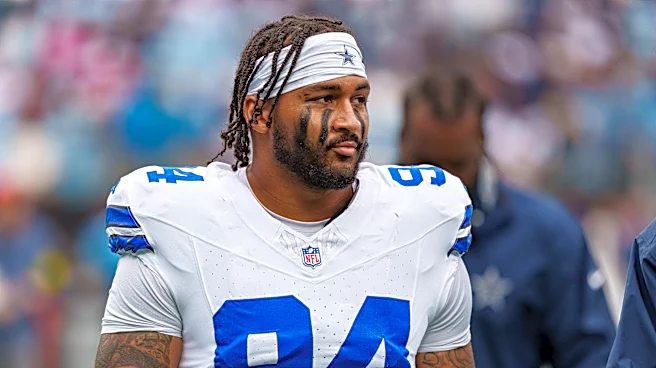
Marshawn Kneeland, a former player for the Dallas Cowboys, was found to have stage 1 chronic traumatic encephalopathy (CTE) following his death by suicide in November 2025. The diagnosis was made by the Boston University CTE Center through a postmortem
brain tissue analysis. Kneeland, who was 24 at the time of his death, had a history of playing high-contact sports, starting tackle football at the age of seven. His family revealed the diagnosis to raise awareness about the struggles faced by athletes in high-contact sports. Dr. Ann McKee, director of the CTE Center, noted that nearly half of the athletes studied who died before age 30 had CTE. The family emphasized the complexity of suicide and urged understanding of the challenges faced by athletes.
Why It's Important?
The revelation of CTE in Marshawn Kneeland highlights ongoing concerns about the long-term health impacts of high-contact sports like football. CTE, a progressive brain disease caused by repeated head trauma, has been linked to various cognitive and emotional issues, including depression and suicidal thoughts. This case underscores the need for increased awareness and preventive measures in sports to protect athletes. The NFL and other sports organizations may face pressure to enhance safety protocols and support systems for players. The diagnosis also contributes to the broader discussion on mental health and the importance of addressing it within the sports community.
What's Next?
The disclosure of Kneeland's CTE diagnosis may prompt further research into the disease and its prevalence among young athletes. Sports organizations might consider revising safety standards and implementing more rigorous health monitoring for players. There could also be increased advocacy for mental health resources and support for athletes dealing with the repercussions of head injuries. The NFL and other leagues may face calls for policy changes to better protect players and address the risks associated with high-contact sports.