






What's Happening?
The Miami Marlins are looking to their farm system and current roster to address key team issues, particularly in their pitching rotation and overall offensive performance. President of baseball operations Peter Bendix is expected to make strategic decisions
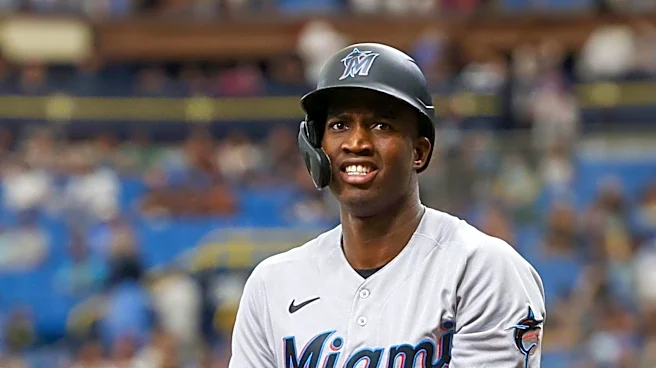
this offseason to integrate both minor-league and major-league talent. Among the highlighted internal candidates are starting pitcher Robby Snelling, a 22-year-old left-hander with strikeout potential, and utility player Javier Sanoja, 24, who demonstrated significant hustle and contact-hitting ability in the latter half of the season. Sanoja's role is anticipated to expand next season, potentially at third base, following a strong performance where he slashed .357/.379/.607 in his last seven games. Additionally, Joe Mack, a catcher, is expected to build on his rookie season, aiming for significant improvement in 2027 to contribute both defensively and offensively. The team also recognizes Aiva Arquette, a 22-year-old shortstop prospect known for contact and power hitting, who could see regular-season play if he continues to perform well.
Why It's Important?
The Marlins' strategy of developing and promoting internal talent is crucial for sustainable team building and long-term success in Major League Baseball. By focusing on prospects like Robby Snelling, they aim to cultivate a cost-effective and high-performing pitching staff, which is vital for contending in a competitive division. Snelling's potential as a left-handed 'strikeout machine' could provide a much-needed balance to their predominantly right-handed rotation, offering diverse challenges to opposing hitters. The emphasis on players like Javier Sanoja and Joe Mack, who have shown significant promise, reflects a commitment to nurturing homegrown talent. Sanoja's versatility and offensive production could fill critical gaps, while Mack's development as a top defensive catcher with offensive upside could anchor the team for years. This approach not only helps manage payroll but also fosters team chemistry and a strong organizational culture, potentially leading to consistent postseason contention.
What's Next?
The Miami Marlins' front office, led by President of baseball operations Peter Bendix, will focus on strategic decisions this offseason to integrate these internal candidates effectively. Robby Snelling is expected to compete for a spot in the starting rotation next season, with the goal of becoming a key left-handed pitcher. Javier Sanoja's role is likely to expand, potentially securing a more permanent position at third base, given his strong offensive performance and utility. Joe Mack will be tasked with further developing his skills to become a more impactful player on both offense and defense in 2027. Aiva Arquette will continue to be monitored for his progress in the minor leagues, with potential opportunities for major league play if his performance warrants it. The team's success in the upcoming season will largely depend on how effectively these prospects transition into more prominent roles and contribute to the team's overall performance.
Beyond the Headlines
The Marlins' reliance on internal development highlights a broader trend in professional sports where organizations prioritize sustainable growth through their farm systems. This strategy can build a loyal fan base that connects with players who have grown within the organization. Ethically, it underscores a commitment to player development and providing opportunities for young talent, rather than solely relying on expensive free-agent acquisitions. Culturally, it can foster a strong team identity and a sense of continuity, as players who have come up through the system often have a deeper understanding of the team's values and objectives. Economically, it represents a shrewd business model, as developing prospects is generally more cost-effective than signing established stars, allowing for greater financial flexibility in other areas. The success of this approach could serve as a blueprint for other MLB teams looking to build competitive rosters while managing resources effectively.