






What's Happening?
The Boston Red Sox are facing critical roster decisions within five days of the World Series conclusion, specifically regarding player options for pitchers Sonny Gray and Garrett Whitlock. Gray has a $30 million mutual option, which is highly likely to be
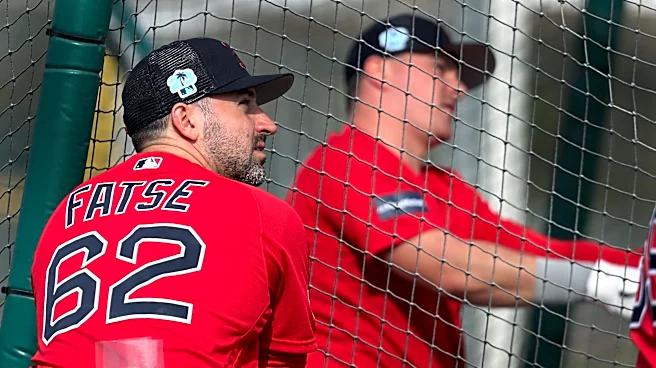
declined by either side, as mutual options rarely get accepted in MLB. In contrast, Whitlock has an $8.25 million club option for the 2027 season, which the Red Sox are almost certain to pick up given his impressive 2026 performance, where he posted a 1.72 ERA and a 59-to-9 strikeout-to-walk ratio in 52 1/3 innings pitched. Beyond these option decisions, Boston must also trim its 40-man roster by four additional spots, as seven players are technically on the roster due to injuries. Isiah Kiner-Falefa and Patrick Sandoval are entering free agency, which will account for two spots, and Gray's likely departure will cover a third, leaving four more cuts to be made.
Why It's Important?
These imminent roster decisions are crucial for the Boston Red Sox as they shape the team's composition and financial flexibility for the upcoming 2027 season. Picking up Garrett Whitlock's option secures a high-performing pitcher with a favorable ERA and strikeout-to-walk ratio, providing stability to their pitching staff. Conversely, declining Sonny Gray's mutual option, while expected, frees up significant financial resources that can be reallocated to address other team needs through free agency or trades. The need to trim the 40-man roster by four additional spots forces the Red Sox to make tough choices about their depth and future prospects. These decisions will impact the team's competitiveness, salary cap, and overall strategy as they prepare for an offseason that could be complicated by a potential MLB lockout in December, making efficient roster management even more critical.
What's Next?
By Monday, November 2nd, the Boston Red Sox must finalize their option decisions for Sonny Gray and Garrett Whitlock and bring their 40-man roster into compliance. This period will be busy for the team as they navigate these contractual obligations and roster adjustments. Following these initial decisions, the Red Sox will likely enter a sprint of offseason activity before a potential MLB lockout in December. This lockout could halt transactions and negotiations, making it imperative for teams to get their rosters in order beforehand. The Red Sox's ability to efficiently manage these early offseason tasks will determine their preparedness for the uncertainties that may arise if a lockout occurs, influencing their ability to acquire new talent and address team weaknesses.
Beyond the Headlines
The Red Sox's roster decisions highlight the complex interplay of player performance, contractual obligations, and strategic planning in professional baseball. The differing outcomes for Gray and Whitlock underscore how player value and team needs dictate financial commitments. Mutual options, like Gray's, rarely favor both parties, often serving as a mechanism for teams to part ways with high-salary players or for players to seek better opportunities. Club options, such as Whitlock's, provide teams with flexibility to retain valuable assets at a predetermined cost. The looming threat of an MLB lockout adds another layer of complexity, forcing teams to accelerate their offseason plans. This situation reflects the broader economic and labor dynamics within professional sports, where financial prudence and strategic foresight are essential for long-term success and stability, especially in an environment of potential labor disputes.