



What's Happening?
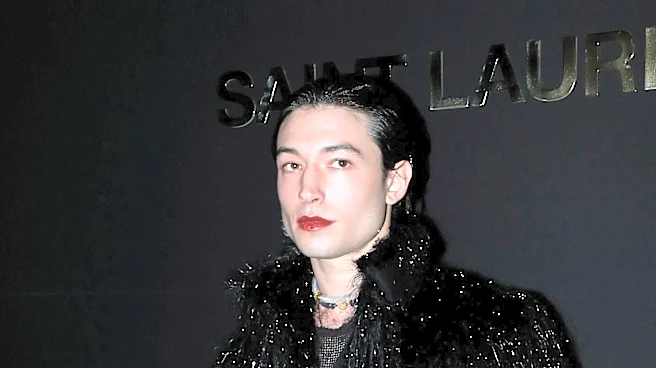
Lin Zhipeng, also known as Finger 223, has partnered with YSL's creative director Anthony Vaccarello to curate an exhibition at Saint Laurent Rive Droit Beijing. The exhibition, themed around Qixi, the Chinese Valentine's Day, showcases Zhipeng's photographs
that capture the essence of summer heat and sensuality. His work is characterized by the use of flowers and fruits as symbols of transience, representing beauty, desire, and decay. The exhibition aims to interpret romance and intimate human connections through the lens of Chinese Qixi culture, presenting moments of love expressed through natural elements and human interactions.
Why It's Important?
This exhibition is significant as it highlights the intersection of fashion and photography, showcasing how cultural themes can be expressed through visual art. It reflects a growing trend in the fashion industry to embrace imperfection and authenticity, moving away from overly polished digital images. The collaboration with a major fashion brand like YSL underscores the importance of cultural representation and artistic expression in global fashion narratives. It also emphasizes the role of exhibitions in fostering cross-cultural understanding and appreciation, potentially influencing future fashion and art collaborations.
What's Next?
The exhibition will continue to run at Saint Laurent Rive Droit Beijing until September 11, 2026. It is expected to attract art enthusiasts and fashion aficionados, potentially leading to further collaborations between Lin Zhipeng and international fashion brands. The exhibition may inspire other artists to explore themes of transience and sensuality in their work, contributing to a broader dialogue on the role of cultural narratives in contemporary art and fashion.
Beyond the Headlines
Lin Zhipeng's work challenges the notion of perfection in photography, embracing the charm of imperfections and analogue technology. This stance resonates in an era dominated by AI-generated images, suggesting a shift towards valuing authenticity and individuality in visual art. The exhibition's focus on Qixi culture also highlights the importance of cultural heritage in shaping artistic expression, encouraging a deeper appreciation for traditional narratives in modern contexts.