







What's Happening?
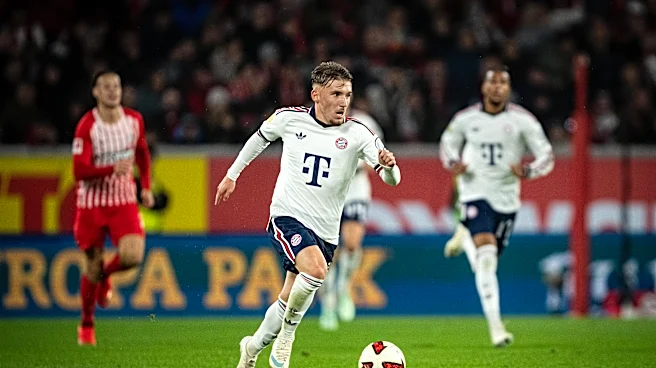
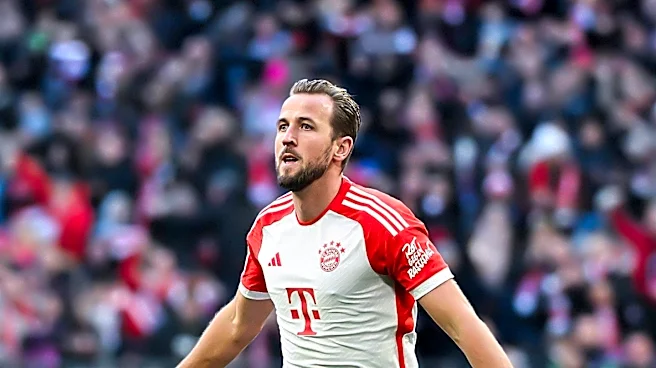
Harry Kane's recent Ballon d'Or victory, while not rectifying past perceived injustices, has brought a sense of relief and celebration to Bayern Munich supporters. The club's fanbase has long felt that previous players, notably Franck Ribéry in 2013 and Robert
Lewandowski in 2020 and 2021, were unfairly overlooked for the prestigious award. Ribéry's strong performance during Bayern Munich's treble-winning season in 2013, and Lewandowski's exceptional goal-scoring campaigns in 2020 (when the award was canceled due to COVID-19) and 2021, are cited as instances where the players deserved the recognition. Kane's achievement marks a significant moment for Bayern Munich, reinforcing the club's ability to attract and develop top individual talent. His outstanding season has provided a new reason for celebration, even as the memories of past snubs persist among the loyal supporters.
Why It's Important?
This event is important for the morale and perception of Bayern Munich as a top-tier football club. For years, the perceived snubs of players like Ribéry and Lewandowski created a narrative of unrewarded excellence, potentially impacting the club's allure for future star players. Kane's Ballon d'Or win, however, shifts this narrative, demonstrating that individual accolades are attainable for players within the Bayern Munich system. This can enhance the club's reputation globally, making it a more attractive destination for elite talent seeking both team success and individual recognition. Furthermore, it validates the club's investment in high-profile players like Kane, proving that their contributions can lead to the sport's highest individual honors. The win also provides a psychological boost for the fanbase, reaffirming their club's status among the footballing elite.
What's Next?
Following Kane's Ballon d'Or win, Bayern Munich will likely leverage this achievement in their marketing and recruitment efforts. The club can highlight Kane's success as a testament to their environment for player development and achievement, potentially attracting other top-tier players in upcoming transfer windows. For Kane himself, the focus will be on maintaining his exceptional form and continuing to lead Bayern Munich to further domestic and international titles. The win could also spark renewed discussions within the football community about the criteria and fairness of the Ballon d'Or voting process, especially concerning past controversies. Bayern Munich supporters will undoubtedly continue to celebrate this milestone, hoping it ushers in a new era of both team and individual triumphs for the club.
Beyond the Headlines
Beyond the immediate celebration, Kane's Ballon d'Or win touches upon the broader cultural and historical significance of individual awards in team sports. The lingering frustration among Bayern Munich fans over past snubs highlights how deeply these accolades resonate with supporters and how they can shape a club's identity and narrative over time. It also underscores the subjective nature of such awards, where exceptional individual performances can sometimes be overshadowed by external factors or perceived biases. The win serves as a reminder that while team success is paramount, individual recognition plays a crucial role in cementing a player's legacy and a club's prestige. This event could also subtly influence how future generations of players and fans view the importance of individual honors within the context of collective achievement in football.