



What's Happening?
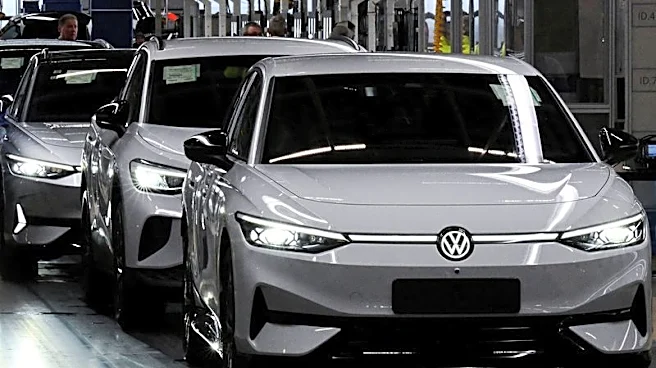
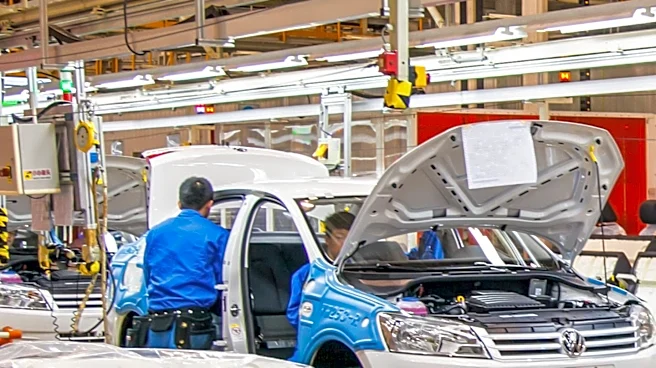
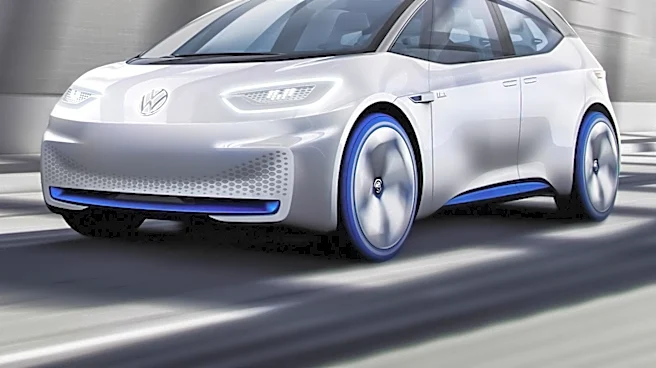
Volkswagen, Europe's largest automaker, announced plans to significantly reduce its model lineup and production capacity as part of a strategic transformation. The company aims to cut its model lineup by up to half over the coming years, focusing on the most
attractive market segments. Additionally, Volkswagen plans to reduce its production capacity to nine million vehicles annually, down from a previous target of 12 million before the COVID-19 pandemic. This decision follows a high-stakes boardroom meeting with the company's supervisory board. Despite reports suggesting potential closures of four German factories and up to 100,000 job cuts, Volkswagen has not confirmed these actions. The company's CEO, Oliver Blume, stated that the transformation plan is intended to make Volkswagen faster, more resilient, and competitive.
Why It's Important?
Volkswagen's decision to streamline its operations and focus on key market segments is significant for the global automotive industry. By reducing its model lineup and production capacity, Volkswagen aims to enhance its competitiveness in a rapidly changing market. This move could impact the company's workforce, particularly in Germany, where potential job cuts and factory closures have been speculated. The transformation plan reflects broader industry trends, as automakers worldwide adapt to challenges such as technological advancements, regulatory changes, and shifting consumer preferences. Volkswagen's actions may influence other automakers to reassess their strategies, potentially leading to further consolidation and restructuring within the industry.
What's Next?
While Volkswagen has not confirmed specific job cuts or factory closures, the company's transformation plan suggests potential changes in its operational structure. Stakeholders, including labor unions and government officials, are likely to closely monitor Volkswagen's next steps, particularly regarding employment impacts. The company's focus on attractive market segments may lead to new product developments and innovations. Additionally, Volkswagen's strategic shift could prompt responses from competitors, potentially influencing market dynamics and competitive strategies in the automotive sector.