



What's Happening?
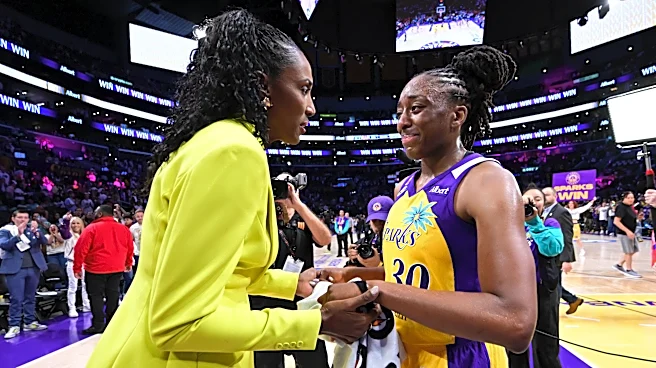
Nneka Ogwumike, President of the WNBPA, has identified the creation of a comprehensive pension plan for WNBA players as her top priority if she were to become the next WNBA commissioner. Ogwumike, who is set to retire from playing at the end of the 2026
season after a 15-year career, highlighted the significant disparity between the WNBA and NBA in terms of player pensions. She noted that current WNBA reimbursement for players is not substantial and expressed a desire to give back to the league's legends in a more meaningful way. Ogwumike has been instrumental in previous collective bargaining agreements that improved player pay and benefits, and her focus on pensions reflects her ongoing commitment to player welfare. While she acknowledged the need to learn the business side of the commissioner role, she has not ruled out executive leadership.
Why It's Important?
Ogwumike's focus on WNBA player pensions is significant because it addresses a critical aspect of financial security for athletes in a league that has historically lagged behind its male counterpart, the NBA. Improving pension plans would provide long-term financial stability for players, many of whom do not earn the same high salaries as NBA players, even with recent increases in WNBA supermax deals. This initiative could attract more talent to the league and encourage longer careers, as players would have greater assurance of post-career financial support. Furthermore, it underscores a broader movement within women's sports to advocate for equitable compensation and benefits, potentially setting a precedent for other professional women's leagues. The move could also enhance the WNBA's appeal as a viable career path, demonstrating a commitment to its athletes beyond their playing years.
What's Next?
As Nneka Ogwumike approaches her retirement from playing in 2026, her potential transition into an executive leadership role within the WNBA, possibly as commissioner, will bring her pension reform agenda to the forefront. The ongoing discussions around the next WNBA commissioner will likely consider candidates with a strong understanding of player needs and a vision for the league's future, making Ogwumike a prominent figure in these conversations. Should she assume such a role, her first order of business would likely involve initiating negotiations or proposals to establish a more robust pension system, drawing on her experience as WNBPA president. This could involve working with team owners, the league office, and player representatives to develop a sustainable and equitable plan. The outcome of these efforts could significantly reshape the financial landscape for WNBA players in the coming years.
Beyond the Headlines
The push for improved WNBA player pensions by Nneka Ogwumike extends beyond immediate financial benefits, touching upon deeper issues of gender equity and the valuation of labor in professional sports. Her comparison of the WNBA's current state to the NBA's early years highlights the historical disparities and the ongoing struggle for recognition and fair compensation in women's athletics. By advocating for a pension plan, Ogwumike is not only addressing a practical need but also challenging the systemic undervaluing of women's professional sports careers. This initiative could foster a stronger sense of community and loyalty among players, knowing that their long-term well-being is a priority. It also reflects a growing trend where athletes, particularly women, are taking active roles in shaping the future of their leagues, advocating for changes that benefit not just themselves but future generations of players. This could lead to a more sustainable and attractive professional environment for women in sports.