



What's Happening?
Riot Platforms (RIOT:NASDAQ) experienced an 18% increase in its stock value between October 20 and November 20, following the announcement of a significant lease agreement. On November 4, Riot Platforms disclosed a lease of its entire Corsicana campus
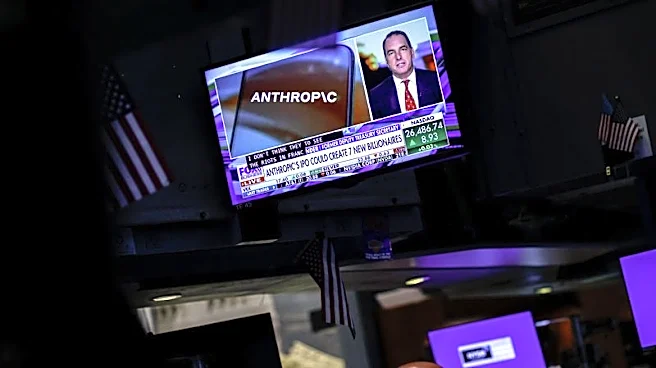
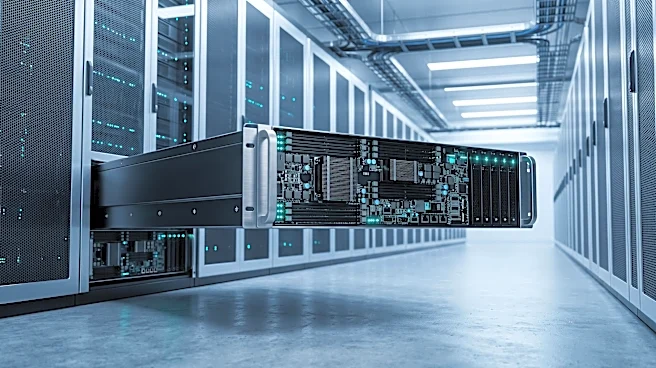
to a "leading Frontier AI Lab," later identified in Riot's quarterly filing as Anthropic (ANT:NASDAQ). This 15-year lease covers 910 megawatts and is valued at approximately $1.8 billion in rent annually, totaling $28 billion over the lease term. A key aspect of this agreement is that Anthropic, the tenant, will be responsible for purchasing and operating the computers, significantly reducing Riot's capital expenditure. Riot's cost for this build is estimated at about $6 million per megawatt, roughly half the typical cost for a Tier 3 data center. CEO Jason Les stated that this lower capital requirement, combined with a strong balance sheet, means the company does not currently anticipate issuing equity to fund the announced projects. The first 400 megawatts are scheduled for delivery in September 2027, with analysts projecting a more than doubling of revenue in 2028.
Why It's Important?
This substantial lease agreement marks a pivotal shift for Riot Platforms, moving beyond its traditional Bitcoin mining operations into the high-growth artificial intelligence data center market. The $28 billion deal with Anthropic provides a long-term, stable revenue stream and significantly de-risks Riot's business model by shifting the burden of computer acquisition and operation to the tenant. This strategy allows Riot to build out its infrastructure at a considerably lower cost, enhancing its financial efficiency and potentially improving its profitability margins. The market's positive reaction, evidenced by the 18% stock surge, underscores investor confidence in this strategic pivot and the burgeoning demand for AI infrastructure. For the broader U.S. technology sector, this deal highlights the intense demand for specialized data center capacity to support advanced AI applications, indicating a robust growth trajectory for companies capable of providing such infrastructure. The agreement also positions Riot as a key player in facilitating the expansion of frontier AI labs like Anthropic, which require massive computing power.
What's Next?
Riot Platforms anticipates financing the project with $6.1 billion to $7.0 billion in project debt. If lenders are hesitant, the agreement stipulates that Anthropic will fund the build and receive rent credits at 12% interest. A critical near-term test for Riot is a bridge loan due on December 31. The recent IPO of Anthropic on November 18, which raised approximately $79 billion for the company, could make it an easier sell to lenders, as a tenant with significant cash reserves reduces financial risk. The first phase of the Corsicana campus, comprising 400 megawatts, is expected to be operational by September 2027, which will be a key milestone for revenue generation. Analysts are closely watching Riot's ability to secure the necessary financing and meet construction timelines, as these factors will determine the successful execution of this strategic pivot. The long-term success will also depend on the continued growth of the AI sector and Anthropic's demand for computing power.
Beyond the Headlines
The strategic pivot by Riot Platforms into AI data centers reflects a broader trend of infrastructure providers adapting to the evolving demands of the digital economy. While Bitcoin mining has been volatile, the demand for AI computing power is experiencing exponential growth, driven by advancements in machine learning and large language models. This move could insulate Riot from the fluctuations of cryptocurrency markets, providing a more stable and predictable revenue stream. However, the reliance on a single tenant, Anthropic, for nearly all of Riot's contracted rent introduces a concentration risk, as noted by Keefe, Bruyette & Woods' downgrade to Market Perform. The success of this venture will largely depend on Anthropic's long-term financial stability and continued growth. This deal also underscores the significant capital requirements for building out AI infrastructure and the innovative financing structures being employed to meet this demand. The shift from owning GPUs (as seen with IREN) to a tenant-owned model for computing hardware represents an interesting evolution in data center economics, potentially setting a new precedent for capital-intensive AI infrastructure projects.