







What's Happening?
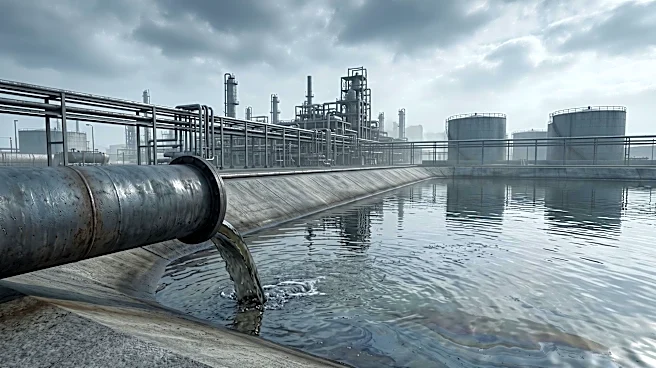
A recent report by the Institute for Energy Economics and Financial Analysis (IEEFA) indicates that water scarcity in Texas poses a significant risk to the viability of planned hydrogen production and carbon capture and storage (CCS) projects. The report suggests
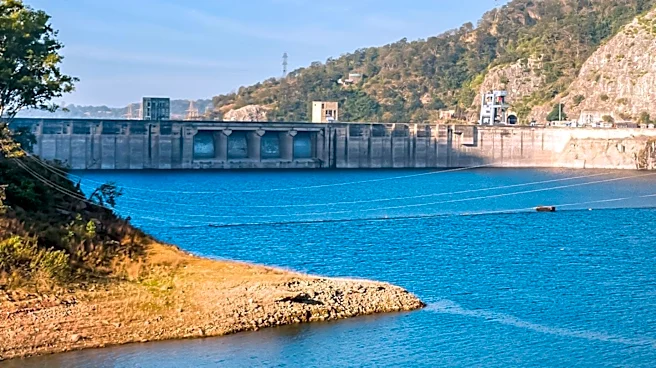
that the projected water demands from these energy initiatives could exceed the available supply by 2030. Currently, 78% of Texas counties are experiencing extremely high water stress, with nearly half facing water demand projections that either meet or surpass their supply. The 2027 State Water Plan for Texas forecasts a 16% deficit in water supply compared to demand by 2030, a projection that does not even account for the substantial water requirements of emerging hydrogen and CCS projects. If all proposed projects are developed to their full capacity by 2040, an additional 106,000 acre-feet of water demand would be created, which is not presently included in the state's water planning.
Why It's Important?
This report underscores a critical challenge for Texas's energy sector and its economic development. The state is a major hub for energy production, and the push towards hydrogen and CCS technologies is part of a broader national strategy to decarbonize industries and achieve climate goals. However, the IEEFA's findings suggest that these ambitious projects could be jeopardized by a fundamental resource constraint: water. The potential for project delays, increased operational costs, and even outright cancellations due to water shortages could deter investors and slow down the transition to cleaner energy sources. This situation highlights the complex interplay between energy policy, environmental sustainability, and resource management, demonstrating that the availability of natural resources like water can be a limiting factor for large-scale industrial development, even in energy-rich regions.
What's Next?
The IEEFA report advises that investors should consider the increasing water supply concerns when evaluating proposed hydrogen and CCS projects in Texas. This suggests that future investment decisions in these sectors will likely be influenced by comprehensive water availability assessments and the development of sustainable water management strategies. Texas policymakers and water authorities may need to revise their long-term water plans to incorporate the demands of these new energy industries. This could lead to increased investment in water infrastructure, exploration of alternative water sources, or the implementation of more stringent water conservation measures across various sectors. The findings may also prompt a re-evaluation of the scale and location of future hydrogen and CCS projects to align with regional water capacities.
Beyond the Headlines
The IEEFA's analysis reveals a deeper systemic issue: the potential for unintended consequences when pursuing new industrial developments without fully integrating resource availability into planning. The report implicitly calls for a more holistic approach to economic and environmental policy, where energy transition strategies are meticulously vetted against ecological and resource limitations. This situation could also spark a broader debate about the 'water footprint' of various energy technologies and the need for innovations that minimize water consumption. Furthermore, it highlights the growing importance of interdisciplinary research and collaboration between energy experts, environmental scientists, and water resource managers to ensure that sustainable development goals are achievable and resilient in the face of climate change and increasing resource demands.