
What's Happening?
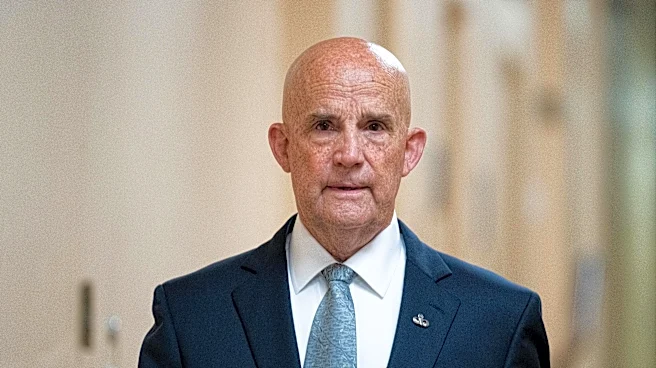
Frank E. Reed, a prominent figure in Philadelphia banking, passed away on Sunday, October 18, at the age of 91 due to complications from cancer at Chestnut Hill Hospital. Mr. Reed, a resident of Lafayette
Hill, was the retired president and chief executive officer of the former CoreStates Philadelphia National Bank. His career included significant roles at Morgan Guaranty Trust Co. (now part of JP MorganChase), where he assisted in the rescue of First Pennsylvania Bank in 1980. He later joined First Pennsylvania in 1984 as its president and chief operating officer, playing a key role in its revitalization. In 1989, he facilitated the merger of First Pennsylvania with CoreStates Corp. and oversaw its Philadelphia National Bank subsidiary until his retirement in 1995. Beyond his banking career, Mr. Reed was a prolific board member for various organizations, including the Philadelphia Zoo, Friends of the Wissahickon, Chestnut Hill Hospital, and the Hill at Whitemarsh.
Why It's Important?
Mr. Reed's contributions significantly shaped the banking landscape in Philadelphia and beyond. His advocacy for interstate banking, long before its congressional approval in 1994, demonstrated his foresight in the financial sector. His leadership at First Pennsylvania Bank, particularly in its resurgence and subsequent merger with CoreStates Corp., was instrumental in creating a 'world-class' financial entity based in Philadelphia. He also championed employee development, instituting a bank-sponsored program to help employees earn high school equivalency degrees, emphasizing that companies 'can’t afford not to' invest in their workforce. This philosophy highlights a commitment to human capital development within the corporate structure, a practice that can foster a more skilled and loyal workforce, ultimately benefiting the broader economy. His avoidance of layoffs during the merger also showcased a dedication to equitable employee relations, setting a precedent for corporate responsibility during significant organizational changes.
Beyond the Headlines
Frank E. Reed's legacy extends beyond his financial achievements, touching upon ethical leadership and community engagement. His colleagues and friends consistently praised his 'strength of character' and 'deep integrity,' qualities that are increasingly valued in corporate leadership. His involvement with numerous non-profit boards, such as the Philadelphia Zoo and the Pennsylvania Horticulture Society, demonstrates a commitment to civic duty and community enrichment. This aspect of his life underscores the idea that business leaders can and should play a multifaceted role in society, contributing to cultural, environmental, and social well-being. His personal life, marked by a love for gardening, travel, and family, further illustrates a balanced approach to life, suggesting that success in the professional sphere can coexist with a rich personal life and strong community ties. His emphasis on employee improvement programs also reflects a broader understanding of corporate social responsibility, where investing in employees is seen not just as a cost but as a vital investment in societal progress.