





What's Happening?
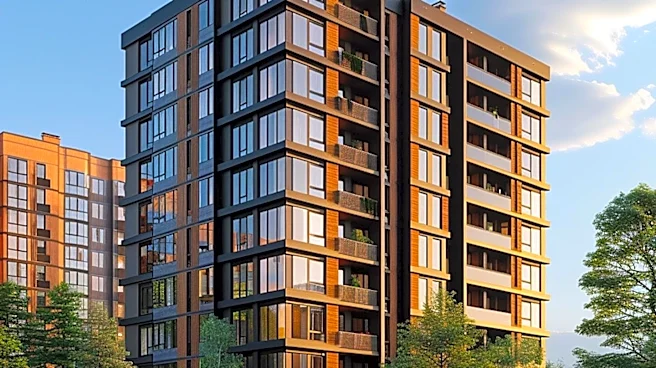
A recent life cycle assessment (LCA) case study by Beyer Blinder Belle (BBB) suggests that mass timber construction can be cost-competitive with traditional steel and concrete structures, while also offering significant environmental benefits. The study evaluated
a three-story vertical expansion project, comparing a baseline steel frame with composite concrete slabs against hypothetical alternatives including cast-in-place concrete, light-gauge steel framing, and mass timber using glulam beams and cross-laminated timber (CLT) floor panels. The findings revealed that while steel accounts for only 19% of the building's mass in the baseline design, it represents 64% of its global warming potential (GWP). In contrast, the timber alternative was dramatically lighter and, due to carbon sequestration, is considered carbon-negative for LCA purposes. Surprisingly, when priced, the timber and steel schemes came back roughly equal, challenging the assumption that mass timber carries a steep premium.
Why It's Important?
This study is highly significant for the U.S. construction industry and its efforts to reduce embodied carbon emissions. For decades, steel and concrete have been the default materials, largely due to perceived cost-effectiveness and familiarity. The revelation that mass timber can compete on price, while offering substantial environmental advantages, could catalyze a major shift in building practices. This is particularly crucial as cities like New York and states like California are implementing embodied carbon policies, with more jurisdictions expected to follow. By demonstrating that carbon reductions don't necessarily require radical design overhauls or budget increases, the study empowers designers and developers to make evidence-driven decisions that benefit both the environment and project economics. This could accelerate the adoption of mass timber, transforming it from a niche option into a mainstream, competitive structural system, thereby contributing significantly to climate goals and sustainable development.
What's Next?
The findings encourage the wider adoption of LCA tools in the early design phases to quantify trade-offs between different structural materials. Architects, engineers, and contractors are urged to challenge existing cost assumptions and explore mass timber as a viable and competitive option. Future developments will likely see increased collaboration between designers and engineers to minimize floor slab thicknesses, as even small reductions can lead to massive carbon savings. The industry will also need to focus on responsible sourcing of timber from sustainably managed forests to maximize climate benefits and minimize transportation emissions. As more jurisdictions enact embodied carbon policies, the demand for materials like mass timber, which offer significant carbon reductions, is expected to grow. This could lead to further innovation in timber construction techniques and supply chain optimization, making it an even more attractive alternative to traditional materials.
Beyond the Headlines
The study's implications extend beyond mere material selection, touching upon broader shifts in architectural philosophy and urban planning. The ability of mass timber to compete on cost and environmental impact challenges the long-held paradigm of heavy industrial construction, opening doors for more sustainable and aesthetically pleasing urban environments. This could foster a new era of 'green building' that is not only environmentally conscious but also economically pragmatic. Furthermore, the emphasis on responsible sourcing highlights the ethical dimensions of material procurement, pushing for greater transparency and accountability in the forestry industry. The potential for timber to be repurposed at the end of a building's lifespan, as opposed to being burned and releasing sequestered carbon, also underscores the importance of circular economy principles in construction. This research could inspire a re-evaluation of building codes and regulations to better accommodate and incentivize mass timber construction, ultimately contributing to a more resilient and sustainable built environment.