






What's Happening?
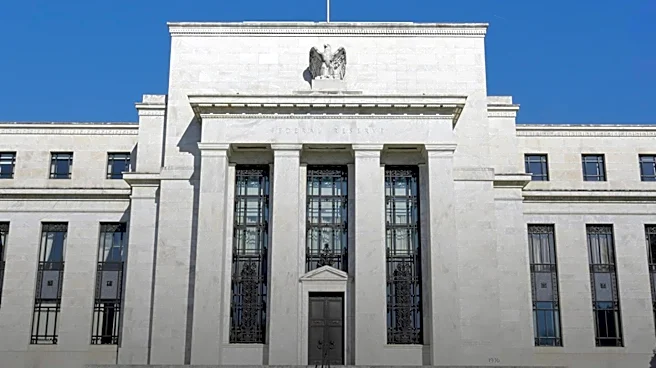
The passage of the GENIUS Act has introduced a new regulatory framework for stablecoins, but it has not fully validated them as equivalent to traditional forms of money. The Federal Reserve is being urged to affirm the 'moneyness' of stablecoins to maintain
the competitiveness of the U.S. dollar. The GENIUS Act aims to integrate stablecoins into the financial system, yet without full recognition, there is a risk of a fragmented digital dollar network. The Bank of England has already taken steps to support stablecoins by offering liquidity backstops, setting a precedent for the Federal Reserve to follow.
Why It's Important?
Recognizing stablecoins as equivalent to traditional money is crucial for maintaining the U.S. dollar's dominance in the global economy. Without this recognition, there is a risk of uncertainty over the value of digital dollars, which could hinder their use in cross-border trade and reduce the U.S. dollar's international influence. The Federal Reserve's action or inaction could significantly impact the future of digital currencies and the U.S. financial system's stability.
What's Next?
The Federal Reserve may need to experiment with interoperability protocols to ensure stablecoins are seamlessly integrated into the financial system. This could involve creating unified ledgers and extending payment rails to digital dollars. If the Fed does not act, it risks a fragmented digital currency system, potentially ceding ground to other currencies and diminishing the U.S. dollar's global standing.