










What's Happening?
The Massachusetts Healey-Driscoll Administration, in collaboration with the Innovation Institute at the Massachusetts Technology Collaborative, has allocated nearly $2 million to six organizations under the Massachusetts Robotic Digital Twin Initiative.
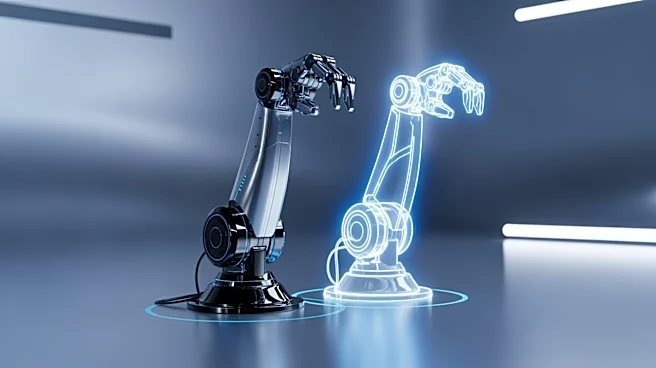
This funding aims to enhance the commercialization of robotics hardware by integrating digital twin technologies. Digital twins are virtual replicas of physical robots that allow for virtual testing, which can reduce costs, improve safety, and accelerate innovation. The initiative supports the development of digital twins that will be publicly accessible, fostering a broader robotics ecosystem. Governor Maura Healey emphasized Massachusetts' leadership in robotics innovation and the state's commitment to supporting the industry's growth. The initiative is part of a broader economic development strategy, including the Mass Wins Act, which proposes further investments in robotics research and development.
Why It's Important?
This initiative is significant as it positions Massachusetts as a national hub for robotics innovation, supporting over 500 robotics companies and numerous research labs. By lowering barriers to entry, such as high costs and adoption risks, the initiative facilitates the commercialization of emerging technologies. This not only aids in job creation but also strengthens the state's innovation ecosystem. The use of digital twins is expected to enhance workforce development and spark interest in STEM fields, particularly in underserved regions. The initiative also aligns with broader economic goals, as outlined in the Mass Wins Act, to expand state investments in robotics and support the commercialization of new technologies.
What's Next?
The Massachusetts Robotic Digital Twin Initiative will continue to support nonprofits, startups, and research institutions in developing novel robotic platforms. The six grantees will leverage additional resources from industry and academic partners to further their projects. As these digital twins become publicly accessible, they are expected to facilitate collaboration across sectors, including transportation, logistics, and advanced manufacturing. The initiative's success could lead to further state investments and potentially influence national robotics policy. Stakeholders, including political leaders and industry experts, will likely monitor the initiative's impact on job creation and technological advancement.
Beyond the Headlines
The initiative's focus on digital twins highlights a shift towards more efficient and safer robotic testing and development. This approach not only reduces the time and resources required for experimentation but also promotes a culture of innovation and collaboration. By making digital twins accessible, the initiative democratizes access to advanced technologies, potentially leading to breakthroughs in various sectors. The emphasis on workforce development and STEM education could have long-term cultural and economic impacts, fostering a new generation of innovators and skilled workers in the robotics field.