



What's Happening?
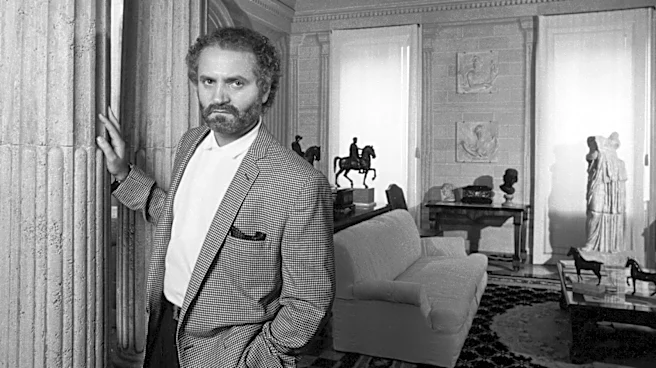
Gianni Versace, a pivotal figure in the fashion industry, is being recognized for his revolutionary approach to design and materials. Born in Reggio di Calabria, Italy, in 1946, Versace began his career as an apprentice in his mother's dressmaking business.
He later co-founded the Versace brand with his siblings, Santo and Donatella, opening his first store in Milan in 1978. Versace distinguished himself by refusing to adhere to prevailing trends, instead focusing on creating garments that flattered women through his unique vision. He was an innovator, developing new materials like oroton mesh chainmail and pioneering fabric-fusing technologies. His brand gained significant traction through collaborations with A-list celebrities such as Madonna, Princess Diana, Tina Turner, Elton John, and Naomi Campbell, a strategy that was groundbreaking at the time for elevating a fashion brand. Despite his life being cut short in 1997 at the age of 50, his impact on fashion remains profound.
Why It's Important?
Versace's legacy is important because it redefined the relationship between high fashion and celebrity culture, a model that is now commonplace in the U.S. and global fashion industries. His innovative use of materials and design techniques pushed the boundaries of what was considered possible in garment creation, influencing countless designers and contributing to the evolution of modern fashion aesthetics. By prioritizing individual vision over fleeting trends, Versace established a brand identity that resonated with a broad audience, including American consumers who sought distinctive and luxurious styles. His approach to marketing through celebrity endorsements set a precedent for how fashion houses engage with public figures, significantly impacting brand visibility and consumer desire in the U.S. market. The enduring appeal of the Versace brand in the U.S. underscores the lasting power of his creative and business strategies.
What's Next?
The continued recognition of Gianni Versace's contributions suggests an ongoing appreciation for his design philosophy and business acumen within the fashion world. Future retrospectives, academic studies, and brand initiatives are likely to further explore and celebrate his work. The Versace brand, under the continued leadership of his family, will likely draw upon his foundational principles of innovation and bold design to inform future collections and marketing strategies, maintaining its relevance in the competitive U.S. and international fashion markets. The influence of his celebrity collaboration model will continue to be a benchmark for emerging and established brands looking to connect with consumers. This ongoing legacy ensures that Versace's impact will continue to shape fashion trends and business practices for years to come.
Beyond the Headlines
Beyond the immediate impact on fashion trends, Versace's story highlights the broader cultural shift towards individual expression and the power of branding in a globalized market. His refusal to follow trends can be seen as a precursor to the modern emphasis on personal style and authenticity. The tragic end to his life also underscores the intense pressures and public scrutiny faced by figures at the pinnacle of creative industries. His pioneering use of celebrity endorsements transformed fashion from an exclusive domain into a more accessible and aspirational lifestyle, deeply embedding it within popular culture. This approach has had a lasting effect on how luxury goods are perceived and consumed in the U.S., blurring the lines between art, commerce, and entertainment, and setting a precedent for the pervasive influence of celebrity in consumer choices.