

What's Happening?
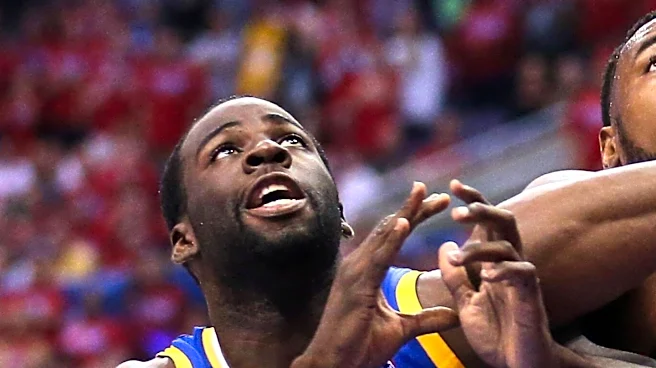
Draymond Green, a veteran forward for the Golden State Warriors, revealed that he intentionally forfeited $54 million in potential earnings during his contract negotiations to maintain his personal relationship with former Warriors General Manager and
President of Basketball Operations, Bob Myers. Green explained that his bond with Myers extended beyond typical executive-player dynamics, citing Myers's support during challenging times, such as Green's suspension in Game 5 of the 2016 NBA Finals. This personal connection influenced Green's approach to contract extensions, prioritizing long-term harmony over maximizing every dollar. Myers, who drafted Green in 2012, emphasized Green's relentless desire to win and his direct communication style as foundational to their mutual trust. Myers stepped down from his role at the conclusion of the 2022-23 season, acknowledging that the intense personal relationships with core players like Green made objective business decisions difficult.
Why It's Important?
This revelation highlights the significant role that personal relationships can play in professional sports, particularly in high-stakes environments like the NBA. Green's decision to forgo substantial income underscores a unique player-management dynamic, where loyalty and trust superseded financial maximization. This approach contrasts with the often-transactional nature of professional sports contracts and could influence how other players and front offices view long-term relationships. For the Warriors, this demonstrates a culture that fostered deep connections, contributing to their dynasty. The financial flexibility created by Green's sacrifices, such as the $14 million left on the table in 2016, directly enabled key team acquisitions like Kevin Durant, impacting the team's championship success. This also sheds light on the emotional toll and complex decision-making faced by executives like Myers, who must balance personal bonds with organizational objectives.
What's Next?
With Myers no longer with the Warriors, the future impact of such deep personal relationships on the team's contract negotiations and player retention strategies remains to be seen. The current General Manager, Mike Dunleavy Jr., will need to navigate player relationships and contract discussions without the established history Myers had with core players. Green's future contract negotiations, and those of other long-tenured Warriors, will be closely watched to see if similar sacrifices are made or if a more traditional, financially driven approach prevails. The legacy of Myers's era, characterized by strong personal bonds, will continue to influence the franchise's identity, but new leadership will inevitably bring different dynamics to player-management interactions. The team's performance in the upcoming seasons will also indicate whether the absence of Myers's unique management style affects team cohesion and success.
Beyond the Headlines
Green's actions raise broader questions about the value of loyalty and personal connections in a highly commercialized industry. While financial incentives typically drive player decisions, Green's choice suggests that non-monetary factors, such as trust and mentorship, can hold significant weight. This could spark discussions about the psychological aspects of team building and the long-term benefits of fostering genuine relationships between players and management. It also provides a rare glimpse into the internal workings of a successful sports franchise, revealing that the 'dynasty' was built not just on talent and strategy, but also on a foundation of mutual respect and personal sacrifice. The ethical implications of such sacrifices, particularly in a league where player empowerment and financial maximization are increasingly prominent, could also be debated, offering a nuanced perspective on player agency and organizational culture.