







What's Happening?
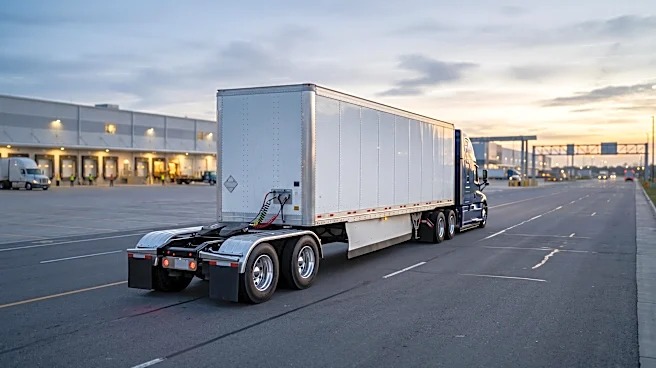
Saia (SAIA), a transportation company, has opened a new terminal in Deer Park, New York, aiming to expand its less-than-truckload network into Long Island and the greater New York City market. This expansion is part of Saia's ongoing strategy to grow
its national terminal network, with over 218 facilities added or upgraded since 2022. Saia's shares are currently trading at US$341.46, reflecting a 1-year total shareholder return of 12.21% but a 3-year return down by 10.36%. The 90-day share price has fallen by 21.84%. Management's investment in projects like the Deer Park terminal seeks to address concerns regarding shipment volumes and future earning potential. Analysts hold differing views on Saia's valuation, with some seeing it as undervalued at $434 per share based on earnings narratives, while others view it as overvalued at $146.43 per share based on discounted cash flow models.
Why It's Important?
Saia's strategic expansion into key markets like New York City is crucial for its long-term growth and competitive positioning in the less-than-truckload (LTL) sector. The new Deer Park terminal is expected to enhance network density and potentially improve operating ratios at newer sites, leading to higher shipment volumes, revenue growth, and better net margins. This move signals Saia's commitment to capturing market share and optimizing its operational efficiency. However, the conflicting valuation perspectives highlight investor uncertainty regarding the company's future performance. The debate between earnings-driven narratives and cash flow models underscores the complexities in assessing transportation companies, which are susceptible to external factors like fuel and wage inflation, as well as rising claims and insurance costs. The outcome of this expansion will significantly influence Saia's financial health and its standing among competitors in the U.S. transportation industry.
What's Next?
Saia's immediate focus will be on integrating the new Deer Park terminal into its existing network and realizing the anticipated operational efficiencies and volume growth. The company will need to demonstrate that its terminal buildout strategy can translate into improved financial performance, particularly in terms of operating ratio and net margins. Investors will closely monitor upcoming earnings reports for signs of increased shipment volumes and revenue growth. The ongoing valuation debate suggests that market sentiment will remain sensitive to any shifts in operational costs, such as fuel prices and labor expenses, which could impact profitability. Saia's ability to maintain pricing power amidst inflationary pressures will be critical. Further network expansions or upgrades are likely as the company continues to pursue its growth strategy, potentially influencing its stock performance and market perception.
Beyond the Headlines
The expansion of Saia's terminal network reflects broader trends in the U.S. logistics and supply chain industry. As e-commerce continues to grow, the demand for efficient LTL services becomes more critical, driving companies like Saia to invest in infrastructure and network optimization. This investment also highlights the ongoing competition within the transportation sector, where companies are constantly seeking to improve delivery times and reduce costs to gain a competitive edge. The valuation debate surrounding Saia also points to a larger challenge for investors in assessing companies with significant capital expenditures and long-term growth strategies. The interplay between market expectations, operational realities, and macroeconomic factors creates a complex investment landscape. Furthermore, the success of such expansions can have ripple effects on local economies, creating jobs and influencing regional logistics hubs, while also contributing to discussions around infrastructure development and environmental impact in densely populated areas.