
What's Happening?
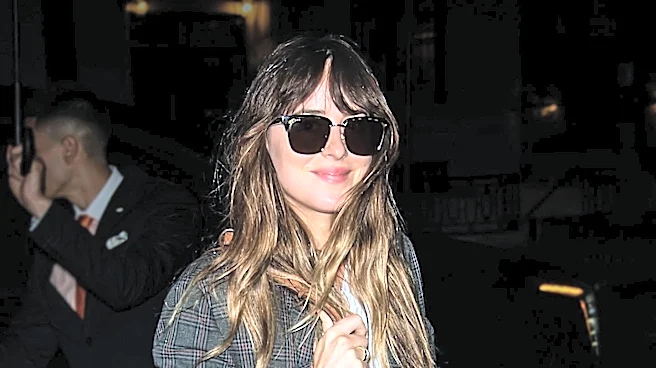
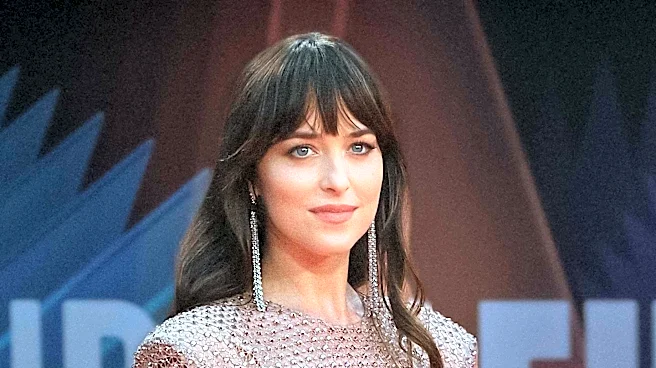
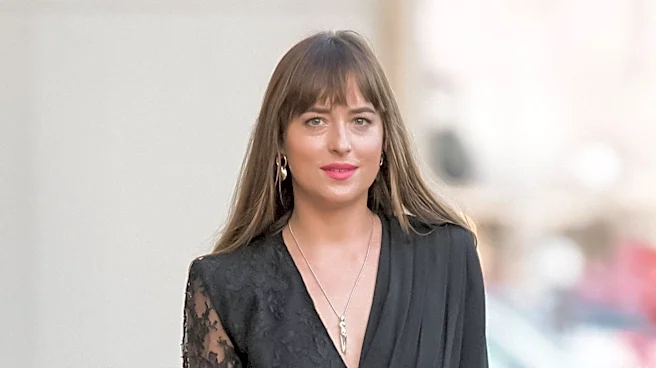
Megyn Kelly, during her talk show on Friday, November 13, 2026, accused actress Dakota Johnson of orchestrating paparazzi photographs outside a gym. Kelly questioned Johnson's previous statements about desiring privacy, suggesting that the gym sighting,
where Johnson was photographed in a mauve outfit, sheer tights, and a crop top, indicated a desire for publicity. Kelly's commentary followed an interview Johnson gave to Vogue in October 2026, where Johnson discussed the challenges of maintaining privacy in the entertainment industry. While Kelly interpreted Johnson's appearance and attire as evidence of a staged encounter, the source notes that there is no independent evidence to support this claim. Descriptions of Johnson's attire from OK! Magazine differed slightly from Kelly's, further complicating the assertion. The article emphasizes that neither the photographs nor Johnson's past comments definitively prove she arranged the paparazzi encounter.
Why It's Important?
This event highlights the ongoing tension between public figures' desire for privacy and the media's scrutiny, particularly in the age of pervasive paparazzi culture. For public figures like Dakota Johnson, managing their public image and personal life is a constant challenge, and accusations of staging photos can damage their credibility and public perception. For media personalities like Megyn Kelly, such commentary can generate discussion and viewership, but without concrete evidence, it risks being perceived as speculative or even unfair. The incident also underscores the difficulty in discerning genuine candid moments from orchestrated publicity stunts, leaving the public to interpret events based on limited information. This dynamic affects how celebrities are perceived and how media narratives are constructed around their lives.
What's Next?
Without further evidence, Kelly's accusation remains commentary rather than a verified fact. It is unlikely that Johnson or her representatives will issue a direct response, as doing so could further fuel the narrative. The incident may contribute to ongoing discussions within the entertainment industry and media about the ethics of paparazzi photography and celebrity privacy. Future public appearances by Johnson might be viewed through the lens of this accusation, with some observers scrutinizing her actions for signs of intentional publicity. The broader conversation about celebrity privacy and media ethics is expected to continue, with this event serving as another example of the complexities involved.
Beyond the Headlines
The incident touches upon deeper implications regarding the nature of celebrity, media responsibility, and public perception. It raises questions about the ethical boundaries of media commentary, especially when accusations are made without independent verification. The public's consumption of celebrity news often blurs the lines between genuine reporting and speculative gossip, influencing how individuals in the public eye are judged. Furthermore, the discussion around Johnson's attire and its perceived implications for her desire for privacy reflects societal expectations placed on women in the public eye, where their clothing choices can be scrutinized and interpreted as indicators of their intentions. This event underscores the complex interplay between celebrity, media, and the public's role in shaping narratives.