



What's Happening?
Varda Space Industries, an El Segundo, California-based company focused on in-space manufacturing, has successfully closed a Series D funding round, raising $250 million. This latest investment brings the company's total funding to approximately $600
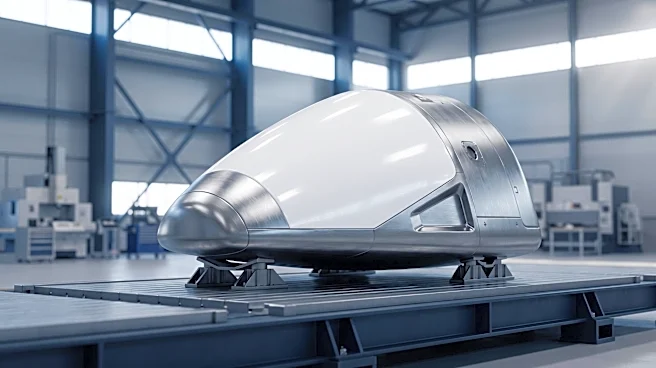
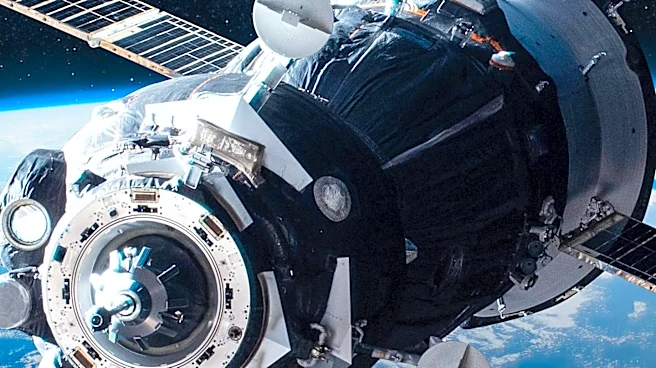
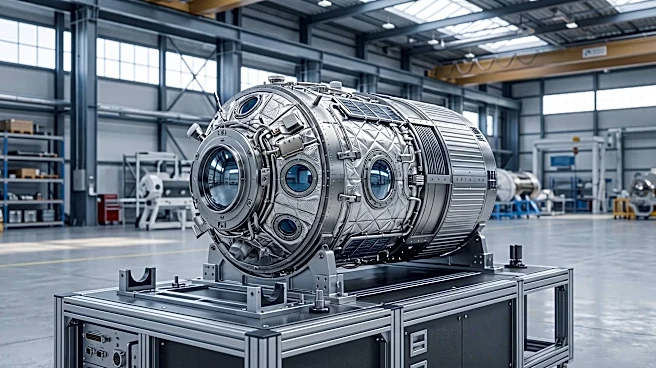
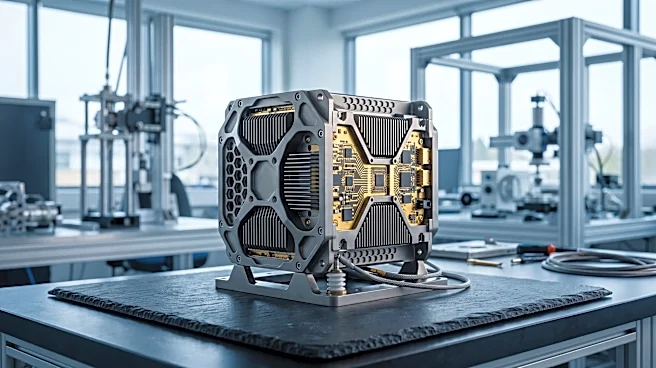
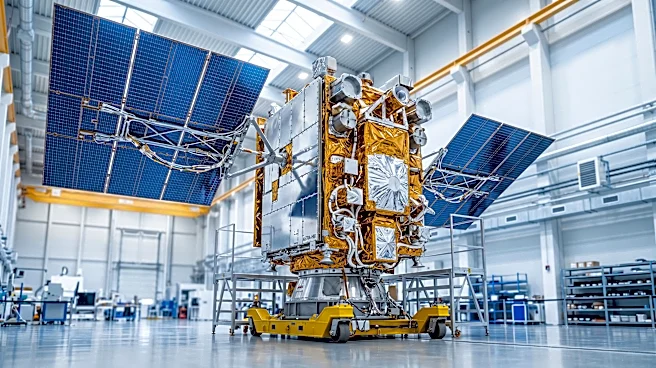
million. The round was co-led by Lux Capital and Natural Capital. Varda's core mission is to produce goods in space, primarily pharmaceuticals, to enhance life on Earth. The company designs, builds, and operates its W-Series vehicles in-house, including pharmaceutical processing payloads, re-entry capsules, C-PICA heat shields, and satellite buses. Varda's Chief Technology Officer, Nick Cialdella, highlighted that the company aims to make re-entry as routine as launch and leverage microgravity for novel material creation. Varda has already flown six missions, with three more launched recently, two of which were defense missions testing hypersonic sensors and materials, and one dedicated to pharmaceutical research on cancer medicine (PROTACs). The company has also partnered with United Therapeutics to reformulate drugs for rare pulmonary diseases in microgravity.
Why It's Important?
This significant funding injection into Varda Space Industries underscores a growing investment trend in the orbital economy and the commercialization of space. The ability to manufacture pharmaceuticals and other materials in microgravity could revolutionize several industries. For the pharmaceutical sector, reformulating existing drugs in space could lead to purer, more homogeneous crystals, potentially improving drug efficacy, reducing side effects, and altering administration methods (e.g., from IV to injection). This could expand patient populations and market opportunities for pharmaceutical companies. Furthermore, Varda's dual-use platform, capable of supporting both pharmaceutical and defense missions, highlights the versatility and strategic importance of in-space manufacturing. The company's efforts to make spacecraft re-entry routine are crucial for establishing a viable commercial space manufacturing ecosystem, reducing costs, and increasing the cadence of missions. This development could position the U.S. at the forefront of a new industrial frontier, creating jobs and fostering technological innovation.
What's Next?
Varda Space Industries plans to significantly accelerate its mission cadence in the coming years, aiming for more launches and re-entries next year than in its first five years combined. This increased activity will support both its pharmaceutical development and defense customers. The company is actively working through the commercialization phase of its in-space manufacturing capabilities, although it acknowledges that this is a new market that requires continuous advancement and iteration. Varda is also collaborating with regulators like the FAA and the Australian Space Agency to streamline re-entry licensing and landing rights, which were initially challenging for its W-1 mission. The goal is to establish an ecosystem that can support thousands of launches and re-entries annually by 2030, minimizing disruption to air traffic. As costs decrease and re-entry becomes more routine, Varda anticipates expanding beyond pharmaceuticals to other materials like semiconductors and fiber optics, marking the next frontier of the space economy.
Beyond the Headlines
The advancements by Varda Space Industries represent a paradigm shift in how certain products, particularly high-value pharmaceuticals, could be developed and manufactured. The ethical and regulatory frameworks surrounding in-space manufacturing are still evolving, as evidenced by the initial challenges with re-entry licensing. The dual-use nature of Varda's technology, serving both commercial pharmaceutical interests and defense applications, raises questions about the intersection of civilian and military space endeavors. The long-term implications include the potential for a robust orbital economy that could attract significant investment and talent, similar to the early days of the internet or traditional aerospace. This could lead to new supply chains, specialized labor markets, and a redefinition of manufacturing processes. The ability to create materials with unique properties in microgravity could also spur scientific discoveries and technological breakthroughs that are currently unimaginable, pushing the boundaries of material science and engineering.