







What's Happening?
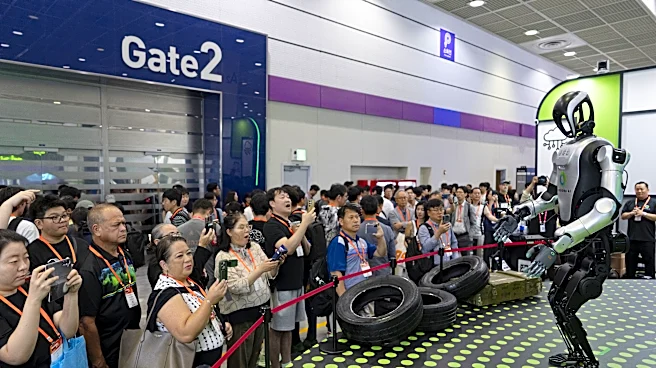
At the Wuzhen Tech Expo, Alibaba Chairman Joe Tsai underscored the critical role of open-source artificial intelligence (AI) in reducing research and development (R&D) costs for small and medium-sized enterprises (SMEs), particularly in developing nations
and non-English speaking regions. Tsai highlighted that open-source AI democratizes technology, making it accessible to a broader global developer community rather than being exclusive to a few tech superpowers. Alibaba executives at the expo also noted that their Accio platform enables individual entrepreneurs and small teams to rapidly launch global e-commerce operations by bypassing traditional hurdles such as multi-platform management, complex technical APIs, and high labor costs. This initiative aligns with Alibaba's broader open-source philosophy, aiming to foster an ecosystem where global developers can actively participate and innovate.
Why It's Important?
Joe Tsai's advocacy for open-source AI at the Wuzhen Tech Expo has significant implications for U.S. businesses and the global technology landscape. By lowering R&D costs and making AI more accessible, Alibaba's strategy could empower a new wave of international competitors, including those from developing countries, to enter markets traditionally dominated by U.S. tech giants. This democratization of AI could lead to a more fragmented yet innovative global market, challenging existing business models and intellectual property norms. For U.S. companies, this means a need to adapt to a more open and collaborative AI environment, potentially requiring shifts in their own R&D strategies and market approaches. The Accio platform's ability to streamline global e-commerce for small players also suggests increased competition for U.S. e-commerce platforms and businesses looking to expand internationally, as it reduces barriers to entry for new market participants.
What's Next?
The continued emphasis on open-source AI by major global players like Alibaba suggests a future where AI development is increasingly collaborative and distributed. This trend could lead to the emergence of new AI hubs and innovations from diverse regions, potentially shifting the center of gravity in the global tech industry. U.S. businesses and policymakers will need to closely monitor these developments to understand their competitive implications and to formulate strategies that either embrace or counter this open-source movement. This could involve increased investment in open-source initiatives within the U.S., or the development of new regulatory frameworks to address the unique challenges and opportunities presented by a more open AI ecosystem. The success of platforms like Accio in facilitating global e-commerce for SMEs could also prompt U.S. companies to develop similar tools or enhance their existing offerings to remain competitive.
Beyond the Headlines
The promotion of open-source AI by Alibaba, as articulated by Joe Tsai, extends beyond mere technological advancement; it represents a strategic move to reshape global economic and technological power dynamics. By positioning open-source AI as a tool for inclusivity and reduced barriers, Alibaba is not only fostering innovation but also potentially building goodwill and influence in developing nations. This approach could create a global tech ecosystem that is less reliant on proprietary Western technologies, fostering greater technological sovereignty in various countries. The ethical implications of widespread open-source AI also come into play, as the ease of access could accelerate both beneficial and potentially harmful applications. The long-term impact could be a more diverse and resilient global tech landscape, but one that also requires new forms of international cooperation and governance to manage its complexities.