




What's Happening?
Boeing has reported a significant reduction in its third-quarter losses for 2026, with revenue increasing by 4% to $24.2 billion and the net loss narrowing from $5.34 billion in 2025 to $116 million. Despite this financial improvement, the company anticipates
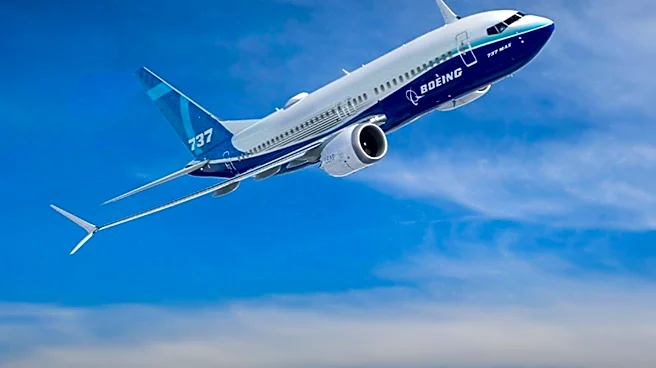
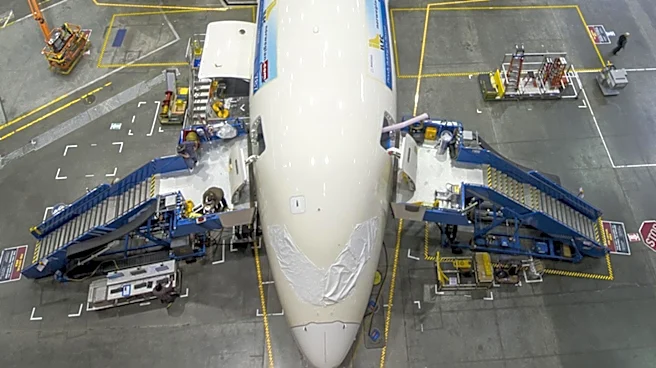
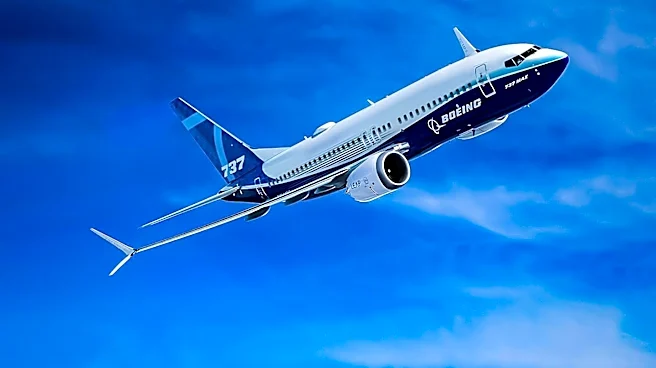
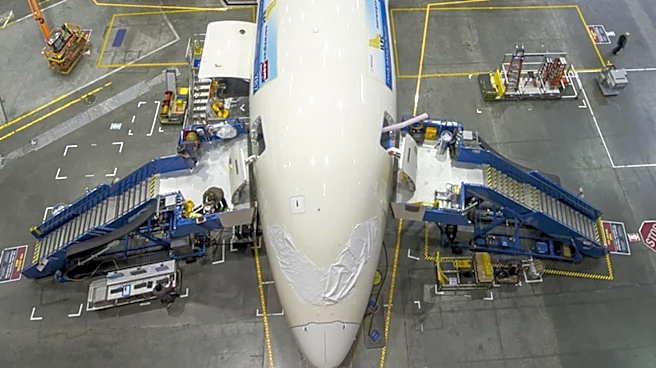
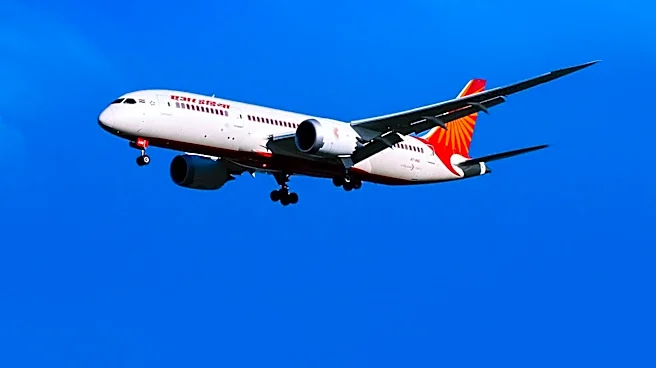
missing its 2026 delivery target of 500 Boeing 737 aircraft due to persistent production challenges. Boeing delivered 161 commercial aircraft between July and September, including 124 Boeing 737s and 22 Boeing 787 Dreamliners, bringing the year-to-date total to 475. The commercial aircraft division, however, continues to operate at a loss, generating $10.7 billion in quarterly revenue (down 3% year-on-year) and an operating loss of $697 million. This is attributed to an unfavorable aircraft delivery mix, rising supply chain costs, and additional expenses related to planned production increases. CEO Kelly Ortberg noted that stabilizing 737 production at 47 aircraft per month is taking longer than expected, with this rate now targeted for 2027, followed by an increase to 52 aircraft per month in the second half of that year. Both the 737-7 and 737-10 variants received FAA certification in 2026, with deliveries expected to commence in early 2027.
Why It's Important?
The delay in Boeing's 737 production targets has significant implications for the U.S. aerospace industry and its global supply chain. Airlines, particularly those heavily reliant on Boeing aircraft like Southwest, face continued uncertainty regarding fleet expansion and modernization. The ongoing production challenges, stemming from issues like wing production and supply chain constraints, highlight the fragility of complex manufacturing ecosystems. While Boeing's defense and services businesses are performing well, the commercial aircraft division's struggles could impact the company's overall financial health and market competitiveness against rivals like Airbus. The deferred production costs for the 737 program, which rose to $14.036 billion by September 30, underscore the financial burden of these delays. For suppliers, the fluctuating production targets create planning difficulties, requiring careful management of investments in capacity, inventory, and labor. The situation also affects air travel consumers, as limited aircraft availability can contribute to higher fares and slower growth in air travel capacity.
What's Next?
Boeing aims to stabilize 737 production at 47 aircraft per month in 2027, with a further increase to 52 aircraft per month targeted for the second half of that year. Deliveries of the newly certified 737-7 and 737-10 variants are expected to begin in early 2027. The company is also working to increase 787 Dreamliner output to ten aircraft per month before the end of 2026, though full-year deliveries are anticipated to be at the lower end of its target. The 777X program continues its certification campaign, with the first delivery of the 777-9 still scheduled for 2027. Investors will closely monitor Boeing's progress in addressing production bottlenecks and achieving its revised targets. Suppliers will need to carefully assess their commitment to increased production rates, balancing the need to meet future demand with the risks of premature investment. The company's next quarterly results will provide further updates on wing stability, North Line certification, and inventory management.
Beyond the Headlines
The persistent production issues at Boeing extend beyond immediate financial and delivery targets, touching upon broader themes of industrial resilience and supply chain vulnerabilities. The challenges in ramping up production, despite strong demand and a record order backlog of $745 billion, suggest systemic issues within the aerospace manufacturing sector. This situation could prompt a re-evaluation of global supply chain strategies, encouraging greater diversification or regionalization to mitigate risks. Furthermore, the delays in delivering more fuel-efficient aircraft could slow the aviation industry's progress towards environmental sustainability goals, as older, less efficient planes remain in service longer. The increased average fleet age, currently at 15.1 years, contributes to higher maintenance and fuel costs for airlines, potentially impacting their profitability and the affordability of air travel. The FAA's role in certification and oversight also remains critical, ensuring that production ramp-ups do not compromise safety standards, a concern amplified by past incidents.