







What's Happening?
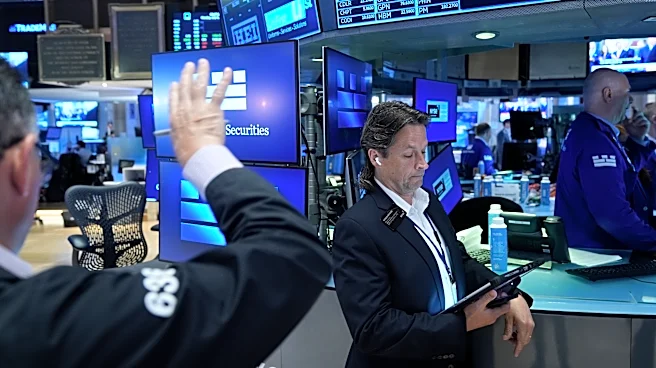
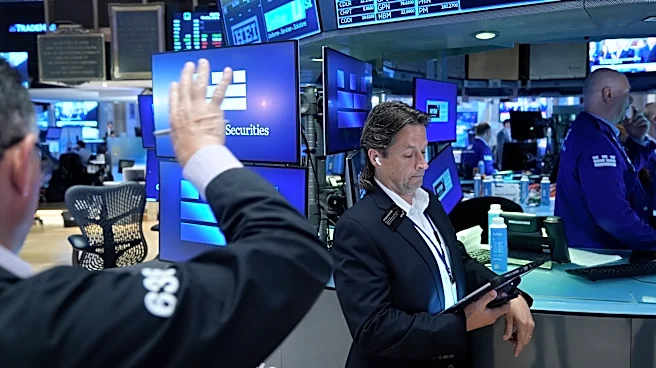
Gold prices remained stable while silver weakened as traders evaluated recent U.S. economic data and geopolitical tensions. Spot gold traded near $3,981.50 per ounce, slightly up, while silver fell to $55.08 per ounce. The market is reacting to softer
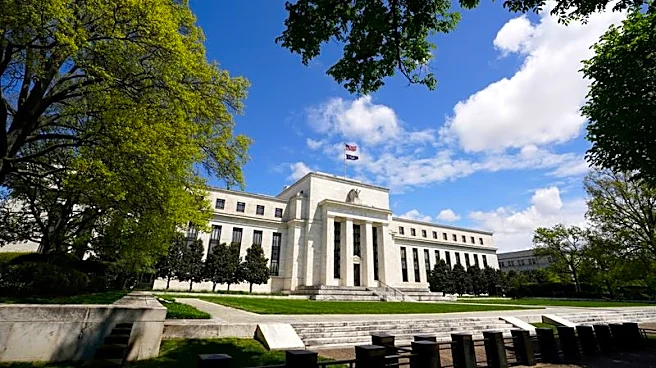
inflation data, resilient U.S. economic indicators, and risks associated with the Strait of Hormuz. Despite a decrease in headline CPI and PPI, retail sales and jobless claims data suggest a robust economy, reducing the likelihood of a dovish Federal Reserve pivot. The ongoing conflict in the Middle East, particularly around the Strait of Hormuz, continues to influence market dynamics.
Why It's Important?
The stability in gold prices and the decline in silver reflect market uncertainty amid mixed economic signals and geopolitical risks. Gold often serves as a safe-haven asset during times of uncertainty, while silver's performance can be more volatile. The situation in the Strait of Hormuz, a critical shipping lane, adds a risk premium to oil prices, impacting inflation and market sentiment. The Federal Reserve's response to these developments will be crucial in shaping future economic conditions and investor strategies.
What's Next?
Traders will focus on Federal Reserve commentary and potential changes in rate expectations following recent economic data. The situation in the Strait of Hormuz will also be closely monitored for further disruptions. A sustained recovery in gold prices above $4,000 could alleviate downside pressure, while continued geopolitical tensions may keep markets on edge.