





What's Happening?
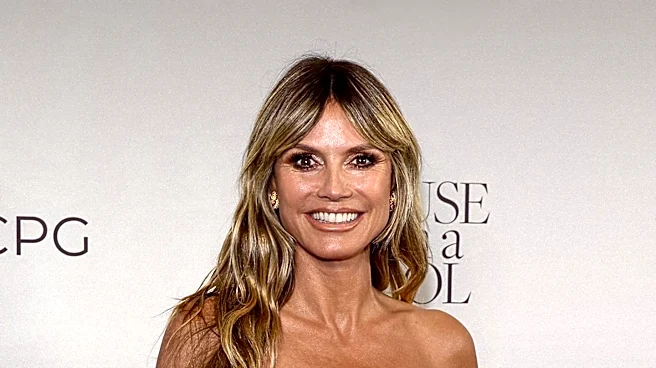
The fashion brand s.Oliver has launched a new campaign titled 'Casual Since Forever,' featuring supermodel Heidi Klum. The campaign uniquely brings together the present-day Heidi Klum with an AI-generated younger version of herself from the 1990s. This
concept is central to the campaign's video and imagery, aiming to connect Klum's personal history, which began in the 1990s, with the brand's Vintage Collection. The campaign emphasizes the idea of change and constancy, portraying Klum's evolving career while highlighting her consistent casual style. s.Oliver uses Klum as a brand face to sharpen its positioning as a casual wear brand, linking her journey to the brand's own evolution and its commitment to uncomplicated casual fashion. The 1990s aesthetic, including sportswear-inspired looks, loose cuts, denim, and prominent logos, is reinterpreted for contemporary styles within the Vintage Collection. The campaign also integrates direct product presentations and purchasing options on its landing page, alongside a sweepstakes for card members to win a travel voucher to Los Angeles, aiming to drive sales and customer engagement.
Why It's Important?
This campaign is significant as it showcases a novel application of artificial intelligence in advertising, particularly within the fashion industry. By using AI to create a younger version of Heidi Klum, s.Oliver is exploring new avenues for celebrity endorsement and brand storytelling. This approach could set a precedent for how brands leverage technology to create compelling narratives that resonate with consumers, especially those nostalgic for past eras. The campaign's focus on the 1990s also taps into a broader cultural trend of retro fashion, influencing consumer preferences and purchasing decisions in the U.S. market. For s.Oliver, this strategy aims to enhance brand recognition and sales by creating a memorable and shareable campaign. However, it also raises questions about authenticity in advertising, as the AI-generated imagery blurs the lines between historical reality and digital creation. The campaign's success could influence other brands to adopt similar AI-driven marketing tactics, potentially shifting industry standards for celebrity partnerships and visual content creation.
What's Next?
The s.Oliver campaign is expected to continue its run, with its impact on sales and brand perception being closely monitored. The brand's use of AI-generated content, while marked as such, may prompt further discussions within the advertising industry regarding transparency and ethical guidelines for AI in marketing. Other fashion brands and advertisers might observe the campaign's reception to determine the viability and effectiveness of integrating similar AI technologies into their future strategies. The campaign's success in driving traffic to its landing page and converting interest into sales will be a key indicator of its overall effectiveness. Furthermore, the ongoing trend of 1990s fashion revival, reinforced by campaigns like this, suggests that consumers can anticipate more retro-inspired collections and marketing efforts from various brands in the near future. The sweepstakes component also indicates a continued focus on customer loyalty programs and direct engagement strategies.
Beyond the Headlines
The s.Oliver campaign featuring an AI-generated younger Heidi Klum delves into deeper implications concerning the evolving relationship between technology, celebrity, and consumer perception. While the campaign aims to convey authenticity and constancy through Klum's personal journey, the use of AI to create a 'younger self' introduces a layer of artificiality. This raises ethical questions about how brands construct narratives and whether consumers can fully distinguish between genuine historical representation and technologically enhanced storytelling. The campaign's explicit labeling of AI-processed images is a step towards transparency, yet it also highlights the growing need for clear standards in disclosing AI's role in commercial content. This development could lead to a broader cultural conversation about the impact of AI on our understanding of reality, memory, and identity, particularly when applied to public figures. The campaign also underscores the commercial power of nostalgia, demonstrating how brands can leverage collective memories and iconic figures to market products, even if it involves digitally recreating the past.