







What's Happening?
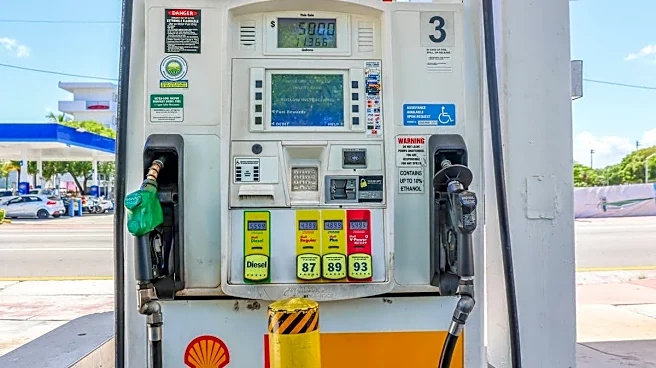
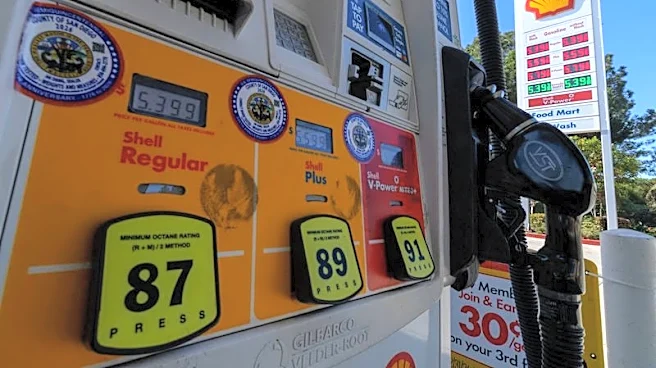
In June, U.S. consumer confidence saw a slight increase, as reported by the Conference Board. The consumer confidence index rose to 91.2 from a revised 90.6 in May. This improvement is attributed to a decrease in gasoline prices, which fell below $4 per
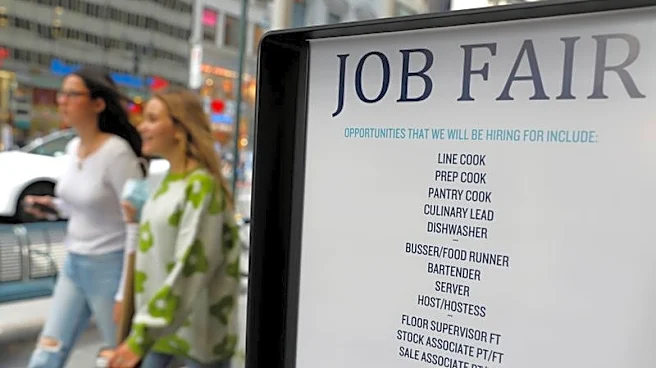
gallon for the first time since the U.S.-Israel conflict with Iran began in February. Despite this positive shift, perceptions of the labor market have worsened, with a significant portion of consumers viewing jobs as difficult to obtain. The percentage of consumers who believe jobs are hard to get has risen to 22.5%, marking the highest level since January 2021. Dana Peterson, the chief economist at the Conference Board, noted that while business conditions are viewed more positively, expectations for the labor market remain stagnant.
Why It's Important?
The rise in consumer confidence, albeit modest, suggests a potential stabilization in consumer sentiment, which is crucial for economic growth. Lower gasoline prices can lead to increased disposable income, potentially boosting consumer spending. However, the deteriorating perception of the labor market could hinder this positive trend, as job insecurity may lead to reduced consumer spending and economic activity. The mixed signals from the consumer confidence index highlight the ongoing challenges in balancing economic recovery with labor market stability. Policymakers and businesses may need to address these labor market concerns to sustain consumer confidence and economic growth.
What's Next?
Future developments in the labor market will be critical in shaping consumer confidence. If job market conditions do not improve, consumer spending may remain subdued, affecting overall economic recovery. Policymakers might consider implementing measures to enhance job creation and stability. Additionally, any changes in geopolitical tensions, particularly in the Middle East, could impact gasoline prices and, consequently, consumer confidence. Monitoring these factors will be essential for understanding the trajectory of consumer sentiment and economic health.