





What's Happening?
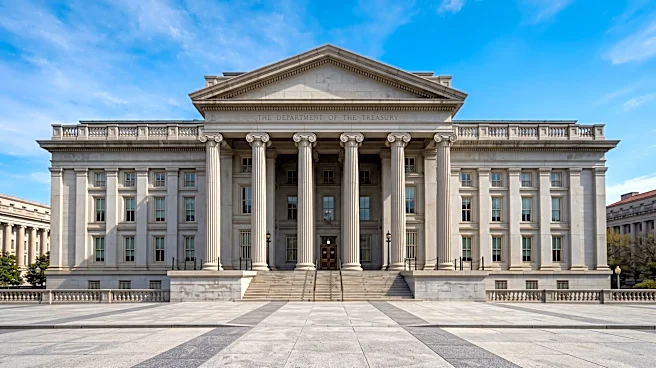
Top officials from President Trump's administration, including Treasury Secretary Scott Bessent and Trade Representative Jamieson Greer, held a videoconference with Chinese Vice Premier He Lifeng, urging China to fully implement its commitments under
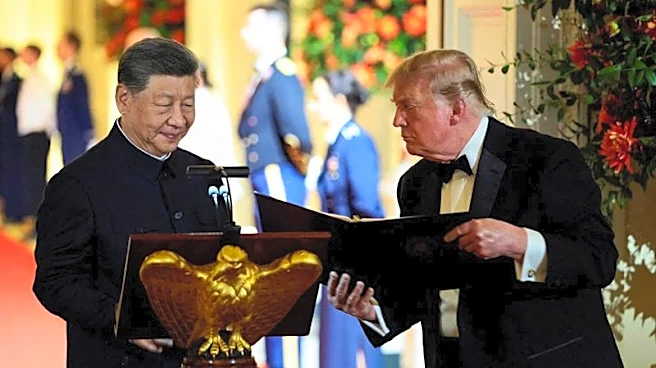
the 2025 Busan trade agreement. The U.S. specifically emphasized the importance of China fulfilling its pledges regarding agricultural purchases, rare earths, and other critical minerals. This accord, reached during a meeting between President Trump and Chinese President Xi Jinping in South Korea, aimed to cap U.S. tariffs on Chinese goods and included China's agreement to purchase 25 million metric tons of U.S. soybeans over three years, as well as maintaining rare earth exports. While the U.S. pressed for compliance, Vice Premier He Lifeng expressed "serious concern" over recent U.S. trade restrictions targeting China. Both parties, however, agreed to continue strengthening cooperation and managing differences to promote a stable trade relationship.
Why It's Important?
The U.S. demand for China to uphold its 2025 trade commitments is critical for American industries, particularly agriculture and technology. China's adherence to agricultural purchase agreements directly impacts U.S. farmers, while the reliable supply of rare earths and critical minerals is vital for the U.S. technology sector and national security. The ongoing trade tensions and the U.S.'s insistence on these commitments highlight the persistent economic friction between the two largest economies. Failure to implement these agreements could lead to renewed trade disputes, potentially impacting U.S. businesses through tariffs, supply chain disruptions, and increased costs. Conversely, China's concerns about U.S. trade restrictions indicate a reciprocal pressure point, suggesting that a stable trade relationship requires concessions and cooperation from both sides. The outcome of these discussions will significantly influence the economic landscape for various U.S. stakeholders.
What's Next?
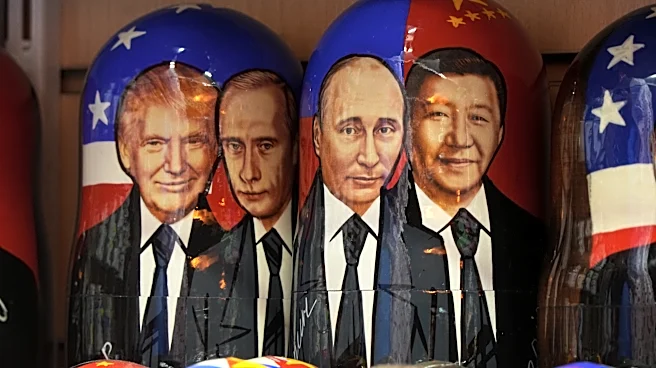
The U.S. and China have extended their trade pact until January 10 of next year, and President Trump and President Xi are expected to meet again at the upcoming APEC forum in Shenzhen. This meeting will be a crucial opportunity to address the outstanding trade commitments and discuss the broader economic relationship. China has also confirmed discussions for a historic trilateral summit involving President Xi, President Trump, and Russian President Vladimir Putin on the sidelines of the APEC gathering. These high-level engagements suggest a continued effort to manage trade differences and explore avenues for cooperation, despite the underlying tensions. The U.S. will likely continue to press for concrete actions on agricultural purchases and rare earth supplies, while China will likely reiterate its concerns about U.S. trade restrictions. The outcomes of these discussions will shape the immediate future of U.S.-China trade relations and could influence global economic stability.
Beyond the Headlines
The U.S.-China trade relationship extends beyond mere economic transactions, touching upon issues of global economic governance and strategic competition. The reliance of the U.S. technology sector on China for rare earths highlights a vulnerability in critical supply chains, prompting discussions about diversification and domestic production. China's concerns about U.S. trade restrictions also reflect a broader push for technological self-sufficiency and a desire to reduce dependence on Western technologies. This dynamic contributes to a global trend of economic decoupling in strategic sectors, which could have long-term implications for international trade norms and multilateral institutions. The potential trilateral summit with Russia further complicates the geopolitical landscape, suggesting a realignment of global powers and a more complex web of economic and political alliances. The ethical considerations surrounding trade practices, intellectual property, and fair competition will continue to be central to these discussions, shaping the future of global commerce.