


What's Happening?
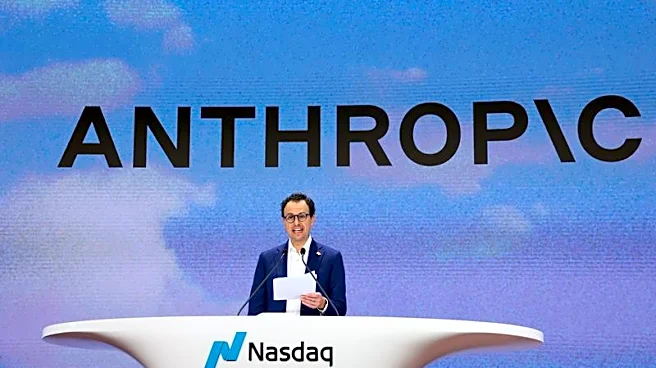
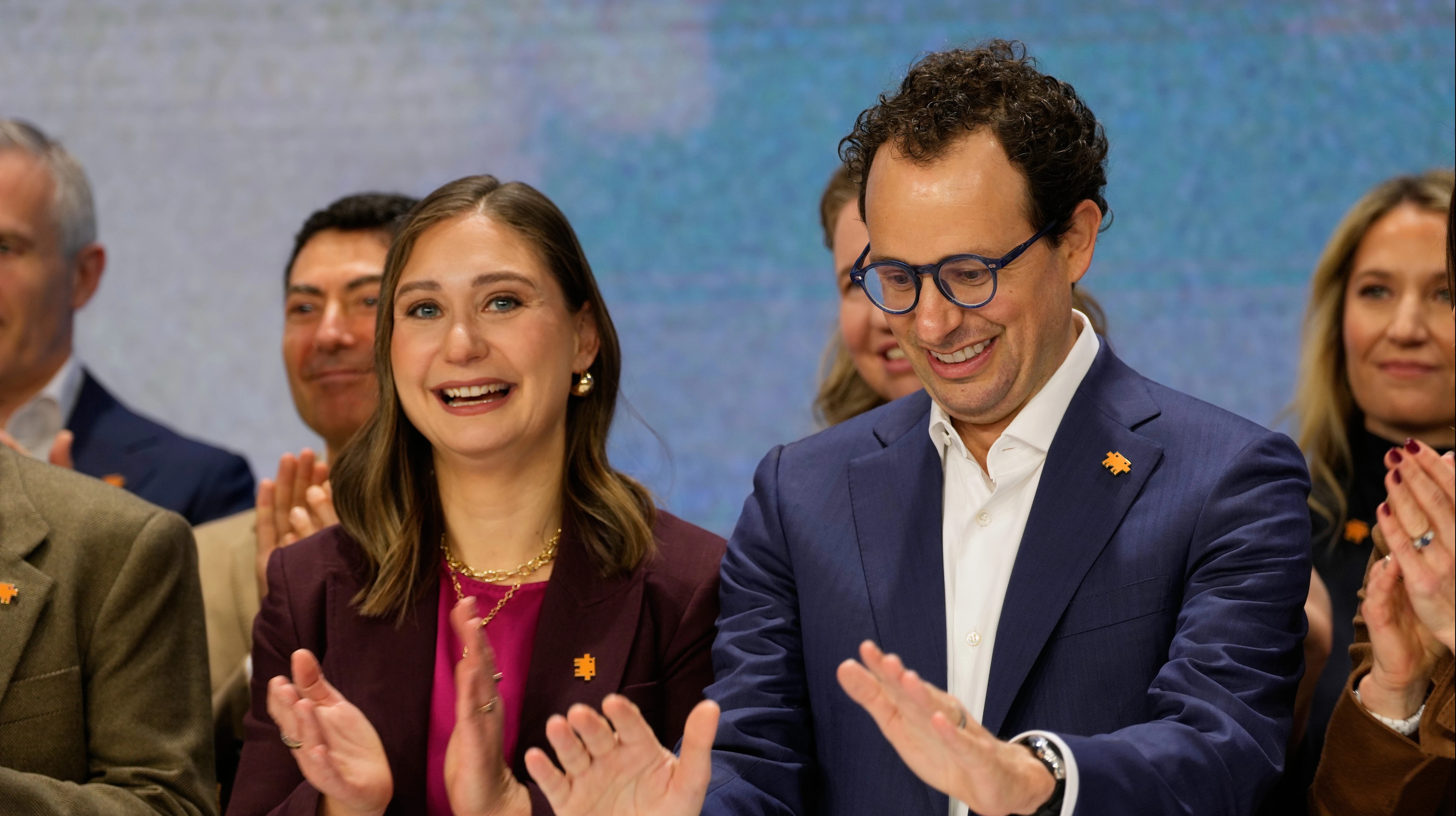
Anthropic, an AI startup, recently completed its initial public offering (IPO), achieving a market value of $1.75 trillion on its first day of trading. This milestone occurred just five years after its founding by former OpenAI employees who sought to prioritize
AI safety. The company, known for its Claude chatbot, has been a prominent voice in warning about the potential catastrophic risks of AI technology. Despite its public benefit corporation status, which legally obligates it to balance shareholder interests with public good, the IPO has led to a significant concentration of wealth for its founders and investors. For instance, co-founders Dario Amodei and Daniela Amodei saw their net worths increase to $22.7 billion and $22.8 billion, respectively, after the IPO. This rapid financial success is juxtaposed with the company's stated commitment to developing AI safely and ensuring its benefits are shared broadly.
Why It's Important?
Anthropic's IPO highlights a critical tension within the rapidly expanding artificial intelligence sector: the balance between rapid technological advancement, immense financial gain, and the ethical imperative of safety. As a public benefit corporation, Anthropic's legal structure is intended to ensure it considers societal impact alongside profit. However, the substantial wealth generated for its founders and investors through the IPO raises questions about whether the benefits of AI development are truly being shared by everyone, as the company claims. The company's internal and external warnings about AI's potential for catastrophic risks, even as it accelerates its own development, underscore a growing concern among experts and the public about the unchecked growth of powerful AI systems. This situation could influence future regulatory discussions and investor expectations regarding AI companies, potentially pushing for more stringent oversight or alternative business models that genuinely prioritize public welfare over shareholder returns.
What's Next?
Anthropic faces the challenge of reconciling its rapid growth and shareholder demands with its stated commitment to AI safety. CEO Dario Amodei has acknowledged that the most difficult safety work lies ahead and has pledged to pace the training and deployment of AI systems to ensure they remain safe and under human control. The company's voluntary commitment from its founders to pledge 80% of their equity to philanthropy, along with Anthropic's pledge of at least 5% of its stock to a public benefit fund, will be closely watched as indicators of its dedication to its public benefit mission. Future developments will likely involve ongoing debates about AI regulation, the implementation of independent evaluators within AI labs, and the broader industry's approach to balancing innovation with ethical considerations. The success or failure of Anthropic in navigating these contradictions could set a precedent for other AI companies entering the public market.
Beyond the Headlines
The narrative surrounding Anthropic's IPO reveals deeper implications about the societal impact of advanced AI and the evolving nature of corporate responsibility. The company's emphasis on potential 'catastrophic or existential risks to humanity' from AI, while simultaneously pursuing aggressive growth, has drawn criticism and even satire, suggesting a perceived hypocrisy. This dynamic highlights a fundamental ethical dilemma: can companies effectively self-regulate on issues of existential risk when immense financial incentives drive rapid development? The concentration of wealth among a few individuals from technologies that could profoundly reshape society also raises questions about economic equity and the distribution of power in the AI era. This situation could fuel public demand for greater transparency, accountability, and perhaps even a re-evaluation of the capitalist models driving technological innovation, particularly in fields with such far-reaching consequences.