






What's Happening?
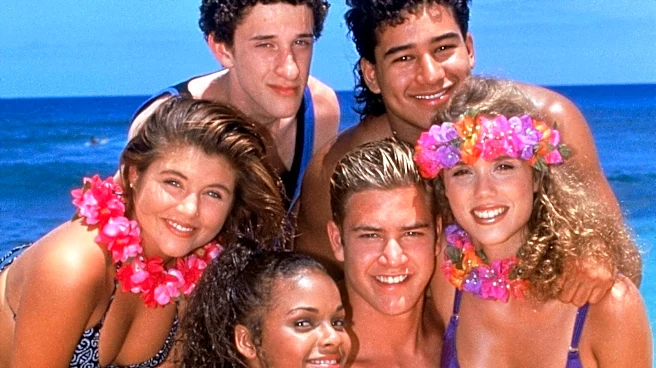
Mario Lopez has publicly supported his former 'Saved by the Bell' co-star Tiffani Thiessen's recent comments regarding the minimal residuals received from the popular 1989-1993 television series. Thiessen revealed in an interview that she and her castmates
received very little compensation from the show, stating, 'We got nothing,' and that residuals have 'dried out' to the point where 'it probably costs more to print the check than it does what’s on the check.' She noted that she only began earning 'real money' after joining '90210.' Lopez affirmed Thiessen's admission on X, sharing her quote with the comment 'Real talk!' Other cast members, including Mark-Paul Gosselaar, have also acknowledged making 'really bad deals' as young actors on the show. A child star manager, Denise Simon, mentioned that Lopez initially earned about $1500 per episode, while the show was generating approximately $15 million in advertising by its second season in 1991.
Why It's Important?
This revelation highlights a significant issue within the entertainment industry, particularly concerning compensation for actors in long-running and highly syndicated shows. The disparity between the show's immense profitability and the minimal residuals received by its stars underscores the often-unfavorable contracts signed by young, inexperienced actors. This situation can have long-term financial implications for performers, especially those whose careers may not sustain the initial success of a breakout role. The public acknowledgment by prominent actors like Lopez and Thiessen brings attention to the need for fair compensation structures and transparency in residual payments, potentially influencing future negotiations and industry standards for actors, particularly child stars. It also sheds light on the historical practices of television production companies and the challenges actors face in securing equitable shares of a show's ongoing revenue.
What's Next?
While the immediate impact on the 'Saved by the Bell' cast's past earnings is unlikely to change, their public statements contribute to an ongoing conversation within Hollywood about fair pay and residuals, especially in the era of streaming services. This discussion could influence future collective bargaining agreements between actors' unions and production studios, potentially leading to more favorable terms for performers. The increased awareness might also prompt younger actors and their representatives to negotiate more robust contracts that account for long-term syndication and streaming revenue. The 'Hollywood Demons' docuseries, which also touched upon the cast's low pay, further amplifies this issue, suggesting a growing scrutiny of historical compensation practices in the industry. This ongoing dialogue could contribute to a broader movement for greater equity and transparency in entertainment contracts.
Beyond the Headlines
The 'Saved by the Bell' residuals issue extends beyond mere financial compensation; it touches upon the power dynamics within the entertainment industry. Young actors, often lacking significant leverage or experienced representation, can be vulnerable to signing contracts that do not adequately reflect the future value of their work. This situation raises ethical questions about how child stars are protected and compensated. The enduring popularity of shows like 'Saved by the Bell' through syndication and streaming platforms means that these productions continue to generate revenue for studios long after their initial run, yet the original talent may see little to none of that continued success. This case serves as a historical example that informs contemporary debates about intellectual property rights, fair labor practices, and the evolving economic models of media consumption, particularly as streaming services redefine how content is distributed and monetized.