


What's Happening?
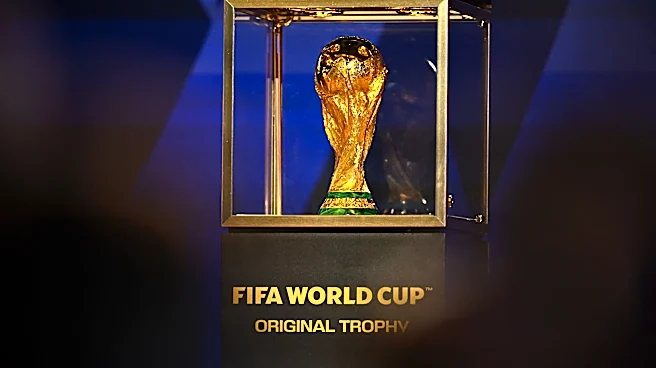
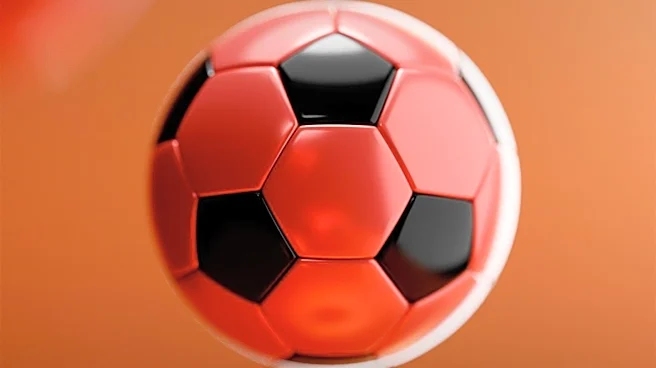
The World Cup final match ball has undergone significant changes from its inception in 1930 to the upcoming 2026 edition. The evolution reflects advancements in technology and design, culminating in the 'Trionda Final' ball for the 2026 World Cup. This
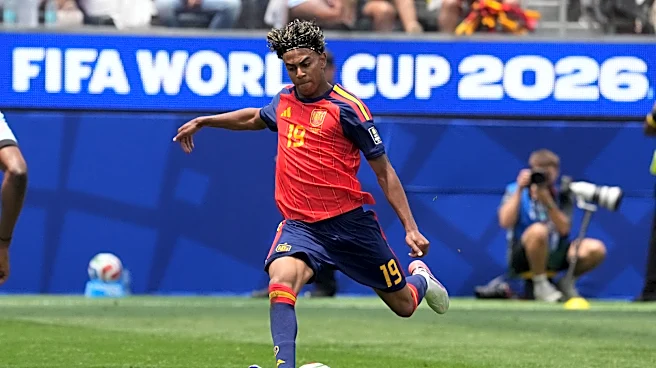
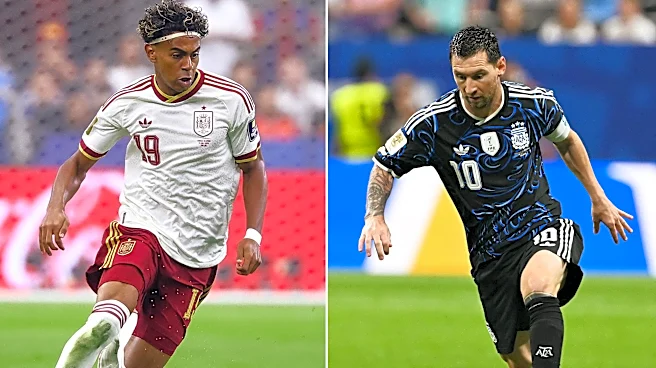
ball represents a sophisticated blend of technology and design, marking a departure from the hand-stitched models of the past. The evolution of the match ball is highlighted by notable designs such as the 'Teamgeist' in 2006, 'Jabulani' in 2010, 'Brazuca' in 2014, 'Telstar 18' in 2018, and 'Al Rihla' in 2022. The upcoming final between Spain and Argentina will showcase the latest in ball technology.
Why It's Important?
The evolution of the World Cup match ball underscores the intersection of sports and technology, showcasing how advancements can enhance the game. Each iteration of the ball reflects improvements in aerodynamics, materials, and design, impacting gameplay and player performance. This progression highlights the role of innovation in sports, influencing how games are played and experienced by both players and fans. The development of the match ball also represents a broader trend of technological integration in sports, which can lead to new standards and expectations for future sporting equipment.
What's Next?
As technology continues to advance, future World Cup tournaments may see even more innovative designs and materials used in match balls. The success and reception of the 'Trionda Final' ball could influence future designs and set new benchmarks for performance and technology in sports equipment. Stakeholders, including manufacturers, players, and sports organizations, will likely continue to explore how technology can enhance the game, potentially leading to further innovations in sports equipment.