





What's Happening?
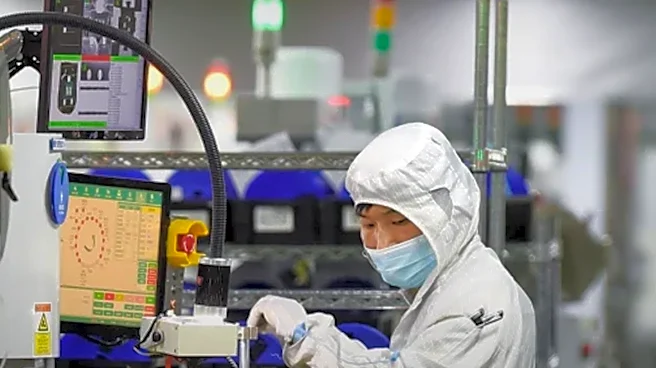
Applied Materials, a critical supplier of wafer fabrication equipment, is positioned for significant growth due to its indispensable role in the production of AI chips by industry leaders like Nvidia and Micron Technology. Nvidia manufactures advanced
logic chips and GPUs for AI model training, while Micron produces high-bandwidth memory chips essential for rapid data access in AI. Applied Materials provides a broad portfolio of equipment used by both logic and memory chipmakers. In its fiscal fourth quarter, Applied Materials' share of semiconductor system sales for DRAM and flash memory chipmaking equipment rose to 42%. The company's revenue climbed 21% in 2026, with a 53% year-over-year increase in Q4, and management anticipates strong performance in 2027, projecting a 22% revenue increase in Q1 and overall market growth of 30% for wafer fabrication equipment.
Why It's Important?
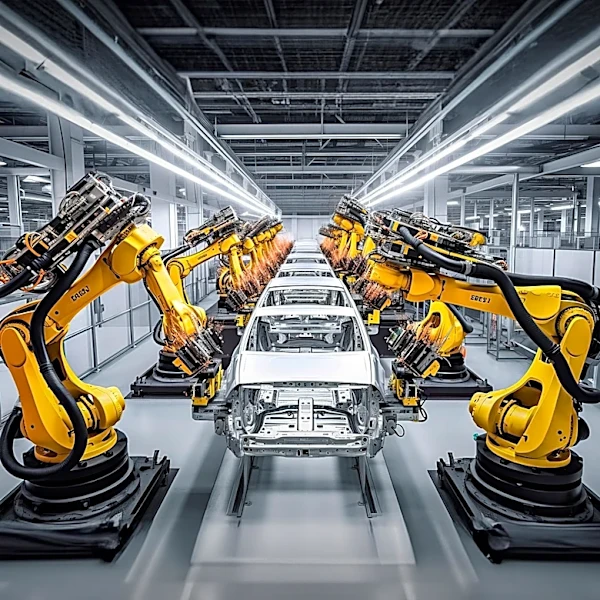
Applied Materials' pivotal role highlights a critical aspect of the U.S. semiconductor industry: the foundational importance of equipment manufacturers. While companies like Nvidia and Micron are at the forefront of AI chip innovation, their ability to produce these advanced components is directly dependent on the sophisticated machinery supplied by companies like Applied Materials. This makes Applied Materials a key enabler of the AI revolution, with its growth directly tied to the broader expansion of AI infrastructure. Its comprehensive portfolio across etch, deposition, and process control segments, combined with significant R&D investment, allows it to offer integrated solutions that increase switching costs for manufacturers, thereby solidifying its market position. This dynamic ensures that as demand for AI chips soars, so too will the demand for Applied Materials' equipment, impacting the entire semiconductor value chain and the U.S. technology sector.
What's Next?
Applied Materials is expected to continue gaining market share in the rapidly expanding wafer fabrication equipment market. Its broad portfolio and ability to invest heavily in research and development position it to meet the evolving needs of chipmakers. As AI development progresses, the demand for more advanced and efficient chips will drive further innovation in manufacturing processes, directly benefiting equipment suppliers. The company's strategy of working closely with manufacturers to build integrated solutions will likely lead to deeper partnerships and increased customer loyalty. This trajectory suggests sustained revenue acceleration throughout 2027 and beyond, as the global AI build-out continues to intensify, making Applied Materials a crucial barometer for the health and growth of the semiconductor industry.
Beyond the Headlines
The success of Applied Materials underscores a less visible but equally vital layer of the technology ecosystem. The company's ability to provide comprehensive solutions across all major segments of wafer fabrication equipment highlights the complexity and specialization required in modern chip manufacturing. This deep technological expertise creates significant barriers to entry for competitors and reinforces the strategic importance of such firms in maintaining U.S. leadership in semiconductor technology. Furthermore, the integrated solutions offered by Applied Materials not only optimize production for chipmakers but also contribute to the overall efficiency and sustainability of the manufacturing process. This foundational role means that any advancements or disruptions in wafer fabrication equipment can have cascading effects throughout the entire digital economy, influencing everything from consumer electronics to national defense capabilities.