






What's Happening?
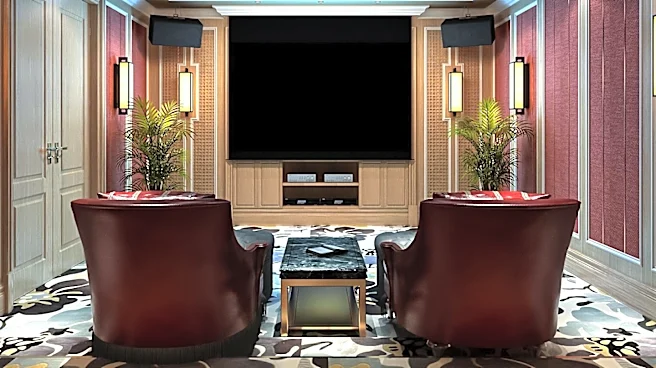
The market for home theater furniture is increasingly focusing on comfort and functionality, with new products designed to optimize the viewing experience. Key considerations include seating that offers adjustable features, built-in storage, and charging
ports for devices. Examples include modular sectional sofas with hidden compartments and cup holders, power lift recliners with side pockets and USB ports, and wall-hugger loveseats that provide multiple charging options and ample storage. Beyond seating, media centers are designed to organize equipment and media libraries, while acoustic paneling is gaining recognition for its role in sound dampening and preventing disturbances. The goal is to create a relaxing and uncluttered home theater space, whether it's a dedicated room or a shared living area.
Why It's Important?
The evolution of home theater furniture reflects a growing consumer demand for integrated and immersive entertainment experiences within the home. This trend impacts manufacturers and retailers in the furniture and electronics sectors, driving innovation in product design to combine comfort, technology, and space efficiency. For consumers, it means a wider array of options to customize their home entertainment setups, enhancing convenience and enjoyment. The emphasis on features like charging ports and storage also highlights the increasing integration of personal devices into the home theater experience. This market shift underscores the importance of creating multi-functional living spaces that cater to both relaxation and technological needs, influencing interior design trends and consumer spending on home amenities.
What's Next?
Future developments in home theater furniture are likely to see further integration of smart technology, such as voice-activated controls for recliners or lighting, and advanced connectivity options. There may be an increased focus on ergonomic designs that promote long-term comfort and health. Manufacturers could also explore more sustainable materials and production methods to appeal to environmentally conscious consumers. As home entertainment systems become more sophisticated, furniture will continue to adapt, offering solutions for larger screens, advanced audio systems, and virtual reality setups. The market will likely see continued innovation in modular and customizable pieces, allowing consumers to tailor their home theater environments to specific needs and evolving technologies.
Beyond the Headlines
The emphasis on comfort and functionality in home theater furniture extends beyond mere convenience; it speaks to a broader societal trend of prioritizing well-being and personalized experiences within one's living space. The home is increasingly viewed as a sanctuary for relaxation and entertainment, prompting a demand for furniture that supports these activities without creating clutter or discomfort. This trend also highlights the blurring lines between different rooms in a home, as living rooms often double as home theaters, necessitating versatile furniture. The integration of charging ports and storage reflects our constant connection to digital devices, even during leisure, underscoring how technology is woven into every aspect of modern life. Ultimately, this evolution in furniture design contributes to a more holistic approach to home living, where every element is considered for its contribution to comfort, utility, and overall quality of life.