




What's Happening?
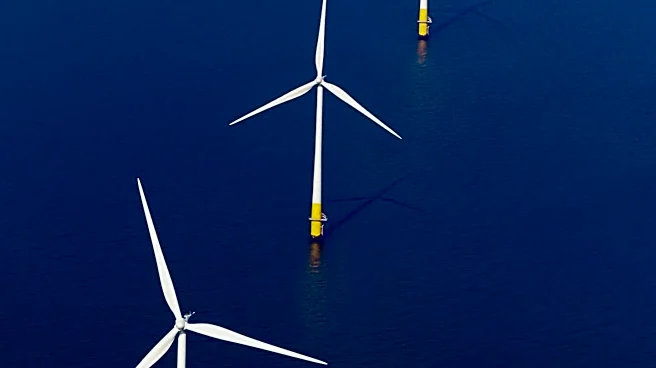
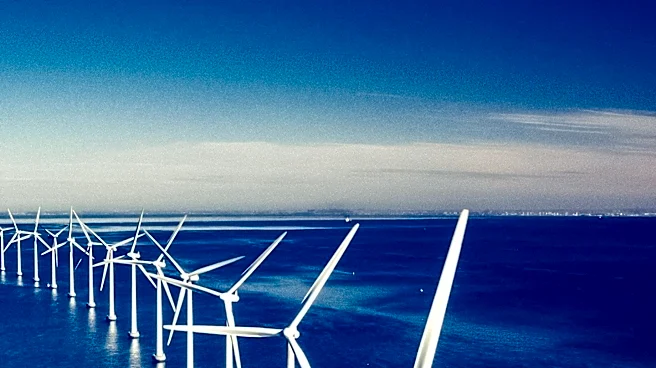
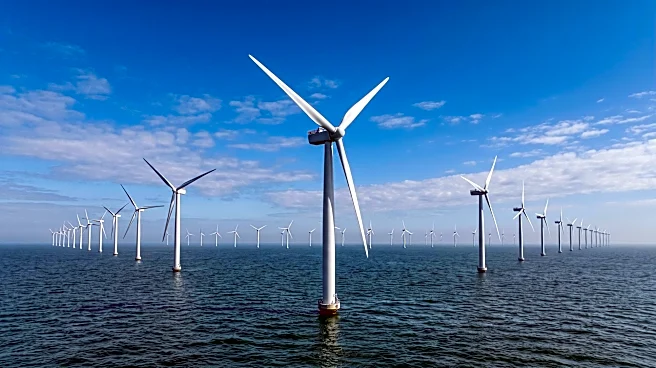
Germany has inaugurated its largest offshore wind farm, He Dreiht, located in the North Sea. This project, consisting of 64 Vestas 15 MW wind turbines, is currently undergoing commissioning and is expected to be fully operational in the coming months,
with a capacity to generate up to 960 MW. EnBW, the primary developer, secured the contract in 2017 without state funding, financing the 2.4 billion euro project through long-term power purchase agreements (PPAs). These PPAs provide price stability and planning certainty for companies, including major U.S. technology firms like Google, as well as other international and German companies such as Evonik, Fraport, Bosch, Salzgitter, SHS Stahl-Holding Saar, Deutsche Bahn, and DHL Group. The project is a significant part of EnBW's strategy to expand renewable energies, aiming for renewables to constitute 80 percent of its generation portfolio by the end of 2030. The wind farm is connected to the electricity grid by TenneT, with power reaching the coast via a platform and two submarine cables.
Why It's Important?
The He Dreiht offshore wind farm is important for several reasons, particularly its implications for U.S. industries and the global energy transition. The involvement of U.S. tech giants like Google as contractual partners for electricity production highlights a growing trend where major corporations are directly investing in or sourcing renewable energy to power their operations. This move helps these companies meet their sustainability goals and reduces their carbon footprint, which is increasingly important for their public image and investor relations. The long-term power purchase agreements offer these companies price stability, shielding them from volatile fossil fuel markets and providing predictable energy costs for their data centers and other energy-intensive operations. This project also demonstrates a model for large-scale renewable energy development that operates without state subsidies, relying instead on private investment and corporate demand, which could influence future energy policy and investment strategies in the U.S. and globally. The project's focus on powering digitalization and artificial intelligence growth underscores the critical role of clean energy in supporting the expanding technology sector.
What's Next?
The He Dreiht wind farm is expected to achieve full operational status in the coming months as individual turbines are gradually connected to the grid, tested, and started up. EnBW is already developing additional major offshore projects, including Dreekant (1 GW) in the German North Sea and Morven (2.9 GW) in Scotland, indicating a continued expansion of its renewable energy portfolio. Germany's government is also recalibrating its offshore wind build-out framework, with an updated amendment to the Offshore Wind Energy Act introducing two-way Contracts for Difference (CfDs) and extending the standard operating lifespan for new offshore installations. While this framework has faced criticism, further revisions are anticipated to support necessary investments in renewable energy. The success and operational efficiency of He Dreiht will likely serve as a case study for future large-scale offshore wind projects, potentially influencing investment decisions and policy discussions in the U.S. and other nations aiming to accelerate their renewable energy transitions.
Beyond the Headlines
The He Dreiht project signifies a deeper shift in how large-scale infrastructure projects, particularly in renewable energy, are financed and supported. Its reliance on long-term power purchase agreements with corporate entities, including major U.S. tech companies, rather than state subsidies, represents a market-driven approach to decarbonization. This model could set a precedent for future energy developments, emphasizing corporate responsibility and direct engagement in clean energy procurement. Ethically, it highlights the increasing pressure on corporations to demonstrate tangible commitments to sustainability, moving beyond mere pledges to direct investment in renewable assets. Legally, the structure of these PPAs provides a framework for stable, long-term energy supply contracts that could become a standard in the renewable energy sector. Culturally, the project contributes to a broader narrative of technological advancement and environmental stewardship, showcasing how innovation in energy production can meet the demands of a rapidly digitalizing world while addressing climate concerns. This shift could lead to a more decentralized and diversified energy landscape, with significant implications for energy security and economic resilience.