





What's Happening?
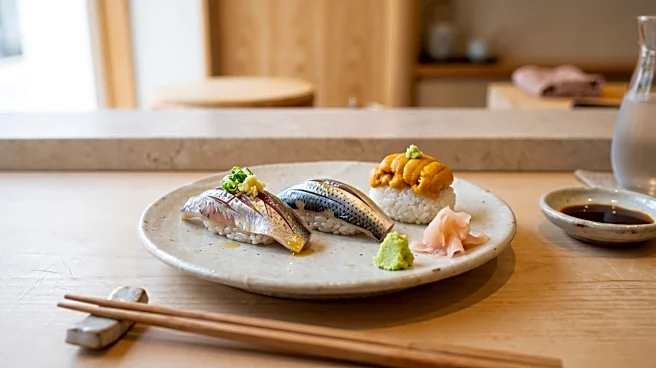
Tokyo's fish markets are currently experiencing a seasonal transition, with summer bringing a distinct change in the types of fish available. Unlike the clean, brisk fish of spring, summer varieties are characterized by their bold, oily flavor and higher
fat content. This shift significantly impacts culinary practices, particularly in sushi traditions like Edomae. For instance, aji (horse mackerel) is considered the quintessential summer fish in Tokyo, known for its shining silver skin and rich oiliness. Other prominent summer fish include iwashi (sardine), which becomes rich and fatty, and anago (saltwater conger eel), reaching its peak in summer and often simmered until soft and sweet. Additionally, unagi (freshwater eel) is consumed around Doyo no Ushi in late July for stamina, and Hokkaido uni (sea urchin) peaks from June to August, prized for its size and sweetness.
Why It's Important?
The seasonal changes in Tokyo's fish market highlight the deep connection between local ecosystems and culinary traditions. This natural cycle dictates not only the availability of certain species but also influences preparation methods and flavor profiles in Japanese cuisine. The emphasis on bold and oily fish during summer reflects an adaptation to the natural characteristics of these species, which are often richer and more flavorful during warmer months. This seasonal variation also underscores the importance of sustainable fishing practices and understanding fish life cycles to ensure continued availability. For consumers, it means a dynamic and evolving culinary experience, with different flavors and textures to anticipate throughout the year. The specific timing of these fish, like aji in July or uni from June to August, also creates distinct periods of peak quality and taste.
What's Next?
As summer progresses, the availability of these specific fish varieties will continue, with their peak seasons dictating their prominence in markets and restaurants. The tradition of consuming unagi around Doyo no Ushi in late July will likely see increased demand for freshwater eel. Towards the end of summer and early fall, the market will begin to transition again, with different fish species coming into season. This continuous cycle means that chefs and consumers will adapt their preferences and cooking methods to align with the freshest and most flavorful offerings of each season. The focus will remain on sourcing high-quality, seasonally appropriate fish, often directly from Japanese fishery ports to ensure freshness and proper handling, especially for delicate, oily varieties.
Beyond the Headlines
The seasonal rhythm of Tokyo's fish market reflects a broader cultural appreciation for nature's cycles and the art of adapting culinary practices to them. This approach goes beyond mere availability; it's about understanding the inherent qualities of ingredients at their prime and honoring them through specific preparation techniques. The emphasis on direct sourcing and meticulous handling, such as Sumotoshiki and Shinkei Jime methods, highlights a commitment to quality and freshness that is deeply ingrained in Japanese food culture. This dedication ensures that the unique characteristics of each seasonal fish are preserved, offering a richer and more authentic dining experience. It also subtly educates consumers about the origins and journey of their food, fostering a deeper connection to the natural world and the efforts involved in bringing these delicacies to the table.