







What's Happening?
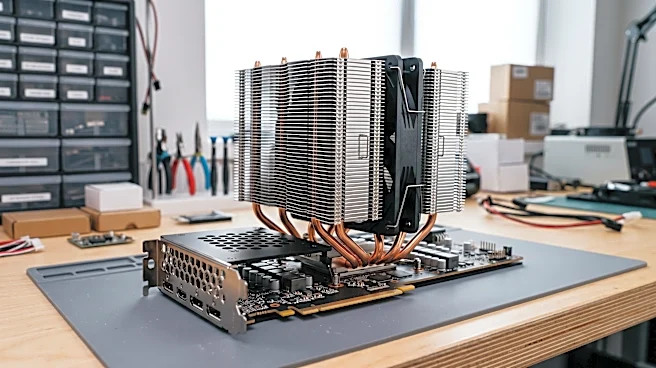
An enthusiast, known as TrashBench, successfully modified a GTX 1080 Ti graphics card by replacing its stock cooler with a dual-tower CPU cooler. This unconventional modification resulted in substantial improvements in thermal performance, power efficiency,
and gaming frame rates. For the GTX 1080 Ti, the mod achieved a temperature reduction of up to 32°C, with the hotspot temperature dropping from 72°C to 42°C in one test. The modification also led to a 30W reduction in power consumption for the same clock speeds, or about a 12% decrease. In terms of performance, the modded GTX 1060 saw a 9% increase in FPS in 'Shadow of the Tomb Raider' compared to its stock cooler, while running 6°C cooler. The GTX 1070, with the dual-tower CPU cooler, ran 20°C cooler than its stock configuration, consumed 15W less, and achieved 7% more FPS in-game with higher clock speeds.
Why It's Important?
This enthusiast's project demonstrates the significant potential for improving the thermal and power efficiency of existing graphics cards through custom cooling solutions. The substantial temperature drops and power savings achieved could inspire further innovation in aftermarket cooling designs, potentially leading to more efficient and powerful GPUs. For consumers, such modifications could extend the lifespan of older hardware, reduce energy consumption, and unlock higher performance from their existing components, offering a cost-effective alternative to upgrading entire systems. The success of this mod also highlights the limitations of some stock cooling solutions, particularly for high-performance GPUs, and could push manufacturers to invest more in advanced cooling technologies. Furthermore, the project showcases the ingenuity within the PC enthusiast community, where individuals are constantly pushing the boundaries of hardware customization and optimization, contributing to a culture of continuous improvement and knowledge sharing.
What's Next?
While this specific modification is complex and requires significant technical skill, its success could encourage other enthusiasts to experiment with similar custom cooling solutions for their GPUs. This might lead to the development of more accessible or standardized kits for adapting CPU coolers to GPUs, or inspire third-party manufacturers to offer more robust aftermarket cooling options. The findings could also influence GPU manufacturers to re-evaluate their stock cooling designs, potentially leading to more efficient and quieter graphics cards in future generations. The project's impact might also be seen in the modding community, fostering new techniques and approaches to hardware optimization. However, such modifications typically void warranties and carry risks, so widespread adoption by average users is unlikely without manufacturer support or specialized third-party solutions.
Beyond the Headlines
Beyond the immediate performance gains, this project touches upon the broader theme of hardware longevity and sustainability in the tech industry. By significantly improving the efficiency and cooling of an older GPU, TrashBench demonstrates a pathway to extending the useful life of electronic components, potentially reducing electronic waste. In an era where rapid technological cycles often lead to frequent upgrades, the ability to enhance and prolong the performance of existing hardware offers an alternative perspective on consumption. This kind of innovation also underscores the value of open-source knowledge and community-driven experimentation in pushing technological boundaries, often outside the confines of corporate R&D. It challenges the notion that optimal performance is solely achieved through factory-designed components, highlighting the power of individual ingenuity to unlock untapped potential in consumer electronics.