







What's Happening?
The U.S. Department of Energy (DOE) has announced a conditional loan commitment of up to $5 billion to finance nuclear energy modernization efforts in Illinois, Maryland, and Pennsylvania. This announcement was made by U.S. Secretary of Energy Chris Wright
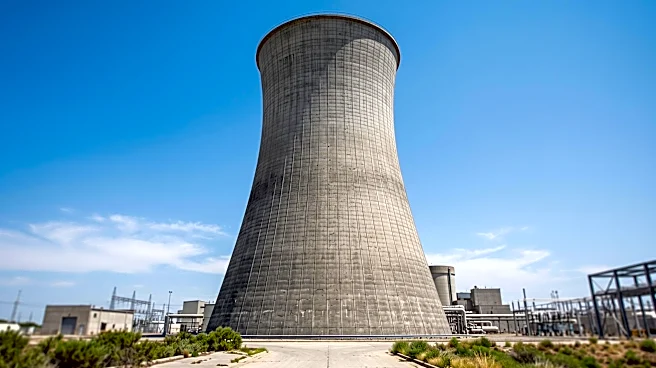
and DOE Energy Dominance Financing Director Gregory A. Beard at the Byron Clean Energy Center, joined by Rep. Darin LaHood (IL-16). The investment aims to support nuclear uprates and modernization across Constellation Energy’s nuclear fleet in these states. Rep. LaHood commended President Trump, Secretary Wright, and Director Beard for recognizing the importance of investing in the existing nuclear fleet, particularly in Illinois. According to a statement from LaHood’s office, this significant investment is projected to support over 10,000 jobs across Constellation Energy’s nuclear facilities. The planned investment locations in Illinois include Braidwood, Byron, Clinton, Dresden, LaSalle, and the Quad Cities. The DOE's commitment is contingent upon Constellation Energy meeting specific technical, legal, environmental, and financial conditions.
Why It's Important?
This $5 billion conditional loan commitment is a critical development for American energy security and the broader U.S. economy. Investing in nuclear energy modernization is essential for maintaining a reliable and affordable energy supply, as nuclear power plants provide a significant portion of the nation's carbon-free electricity. The modernization efforts will enhance the efficiency and longevity of existing nuclear facilities, contributing to grid stability and reducing reliance on fossil fuels. The creation of over 10,000 jobs across Constellation Energy’s nuclear fleet will provide substantial economic benefits to the communities in Illinois, Maryland, and Pennsylvania, supporting local economies and skilled labor. This initiative also aligns with national goals of strengthening the electric grid and promoting energy independence. For Constellation Energy, this loan commitment provides crucial financial support for necessary upgrades, ensuring the continued operation of these vital energy assets. The emphasis on nuclear energy also reflects a strategic move towards a diversified energy portfolio, balancing environmental concerns with the need for consistent power generation.
What's Next?
Constellation Energy will now focus on fulfilling the technical, legal, environmental, and financial conditions required by the DOE to finalize the $5 billion loan commitment. Once these conditions are met, the funds will be disbursed to initiate the nuclear energy modernization projects across the designated facilities in Illinois, Maryland, and Pennsylvania. The implementation of these projects will involve significant engineering, construction, and operational upgrades, which are expected to unfold over several years. The successful modernization of these nuclear plants could serve as a model for future investments in the U.S. nuclear energy sector, potentially encouraging similar initiatives in other states. The continued operation and enhanced performance of these facilities will contribute to the long-term stability of the electric grid and the nation's energy security. Additionally, the job creation associated with these projects will have a sustained positive impact on local economies.
Beyond the Headlines
The DOE's investment in nuclear energy modernization highlights a broader strategic shift towards recognizing nuclear power as a crucial component of a sustainable and secure energy future. Beyond its role in providing carbon-free electricity, nuclear energy offers a high-density, baseload power source that is less susceptible to weather fluctuations compared to renewables like solar and wind. This investment underscores the importance of maintaining and upgrading existing infrastructure, rather than solely focusing on new energy sources. The conditional nature of the loan also emphasizes the rigorous standards and due diligence required for large-scale energy projects, reflecting a commitment to responsible financial stewardship and environmental compliance. This initiative could also stimulate innovation in nuclear technology and safety protocols, positioning the U.S. as a leader in advanced nuclear solutions. The long-term implications include enhanced energy resilience, reduced greenhouse gas emissions, and sustained economic growth in regions hosting these nuclear facilities, contributing to a more robust and diversified national energy landscape.