
What's Happening?
Absolute Superman #25, the finale of Jason Aaron's 'Get Brainiac' arc, has been reviewed, emphasizing the villain Brainiac's psychological manipulation over physical confrontation. The comic portrays Brainiac as a chatty,
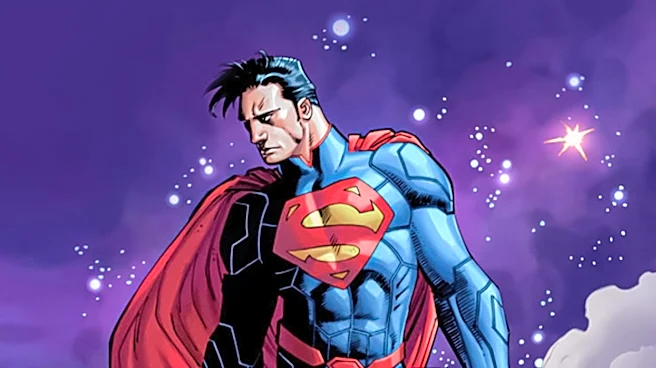
possessive, and clever antagonist who aims to dismantle and own a person's identity, rather than just inflict physical harm. Superman's challenge in this issue is to resist Brainiac's logic without succumbing to it, highlighting a conflict rooted in character and identity. The artwork by Juan Ferreyra, Carmine Di Giandomenico, and Rafa Sandoval is noted for its visual intensity, balancing the nightmare elements with moments of warmth, particularly in the depiction of Superman's Kryptonian parents, Jor-El and Lara.
Why It's Important?
This review underscores a significant trend in modern superhero storytelling: a deeper exploration of psychological and ethical dilemmas. By focusing on Brainiac's intellectual and identity-based attacks, the comic elevates the conflict beyond typical superhero battles, making Superman's struggle more relatable and profound. This approach challenges the hero's understanding of himself and his responsibilities, resonating with audiences who appreciate nuanced character development. The emphasis on Superman's humanity, supported by his family's warmth and the imperfect companionship of others, reinforces the idea that true strength lies not just in powers but in moral courage and resilience against dehumanization. This narrative depth contributes to the enduring relevance of superhero narratives in contemporary culture.
What's Next?
The review suggests that while the immediate conflict with Brainiac resolves, the ending leaves a 'nasty aftertaste' and opens 'another ugly door,' indicating potential future challenges for Superman. This implies that the psychological impact of Brainiac's actions may have lasting consequences for the character, setting the stage for subsequent storylines that could further explore themes of identity, trauma, and resilience. For readers, the issue serves as a substantial ending to the arc, but also a potential springboard for new narratives that delve into the deeper implications of Superman's encounters with such a formidable intellectual foe. The critical reception of this issue may also influence future creative directions for the Superman character, encouraging more character-driven and psychologically complex narratives.
Beyond the Headlines
The portrayal of Brainiac in Absolute Superman #25 as a villain who seeks to 'edit' another person's identity touches upon profound philosophical questions about selfhood and autonomy. In an era increasingly concerned with digital identity, data privacy, and psychological manipulation, a villain who aims to 'dismantle, rearrange and own' a person's essence becomes particularly resonant. Superman's refusal to accept Brainiac's account of his life becomes a powerful metaphor for resisting external forces that seek to define or diminish one's identity. This narrative explores the ethical boundaries of power and intellect, highlighting that the most dangerous threats are not always physical, but those that target the very core of one's being. The comic's ability to weave these complex themes into a superhero story demonstrates the genre's capacity for deeper cultural commentary.