





What's Happening?
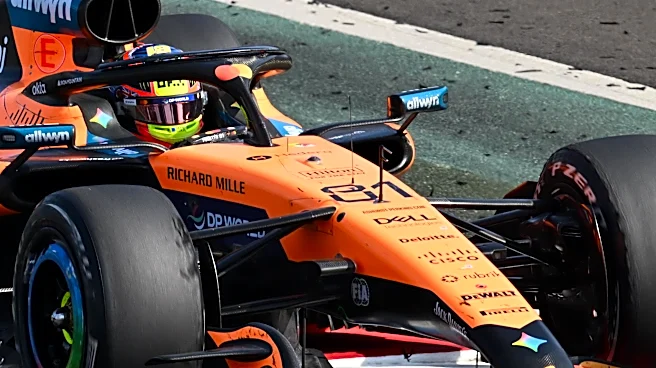
McLaren is set to introduce significant upgrades to its MCL40 Formula 1 car at the upcoming Brazil Grand Prix. These upgrades will include a new front wing concept, which the team anticipates will be incorporated into the launch specification of its 2027
challenger. According to Peter Prodromou, McLaren Technical Director Aerodynamics, the updates also encompass the rear wing and certain floor components, forming part of their ongoing development cycle. The team aims to improve its performance in the remaining races of the current season and build momentum for the next year. McLaren had previously shown strong performance after substantial updates in Hungary, with Lando Norris securing a win, but has since seen a decline in the pecking order despite further upgrades in Baku and Austin. The team currently faces a 17-point deficit to third-placed Red Bull in the championship standings.
Why It's Important?
This strategic move by McLaren highlights the intense competitive nature of Formula 1 and the continuous innovation required to stay at the forefront. By introducing a 2027 front wing concept now, McLaren is not only attempting to salvage its current season but also laying crucial groundwork for its long-term competitiveness. The performance of F1 teams has significant implications for brand visibility, sponsorship deals, and technological advancements that can sometimes trickle down to road car development. For McLaren, a strong showing in Brazil and subsequent races could help close the gap with rivals like Red Bull, impacting their final championship standing and potentially attracting more investment and talent. The decision to test future concepts early also demonstrates a proactive approach to development, which is vital in a sport where marginal gains can dictate success.
What's Next?
The immediate focus for McLaren will be on the Brazil Grand Prix, where the effectiveness of the new upgrades will be put to the test. The team hopes these changes will help them gain ground and improve their performance, especially given that Sao Paulo has historically been a favorable circuit for them. The data and insights gathered from the performance of the new front wing concept will be critical for its integration into the 2027 car. Beyond Brazil, McLaren will continue to evaluate its car's performance in the remaining races, with an eye on securing a stronger position in the championship. The ongoing development cycle suggests that further refinements and updates are likely as the team strives to address its current struggles with pace on certain tracks.
Beyond the Headlines
The introduction of a 2027-spec component in 2024 underscores a broader trend in Formula 1: the blurring lines between current season performance and long-term strategic development. Teams are increasingly using the present to test and refine technologies for future regulations, indicating a highly integrated and forward-thinking approach to engineering and design. This strategy can lead to ethical considerations regarding resource allocation between immediate competitive needs and future planning. It also highlights the immense financial and technical resources required to compete at the highest level of motorsport, where every component is a potential competitive advantage. The success or failure of such early introductions can significantly influence a team's trajectory for years to come, impacting everything from driver recruitment to sponsor confidence.