







What's Happening?
Elmos Semiconductor SE has been awarded 'European Innovator 2026' for its Quantum Random Number Generator (QRNG). This marks the second prestigious award for Elmos' quantum technology this year, following the German Innovation Award 2026. The award ceremony
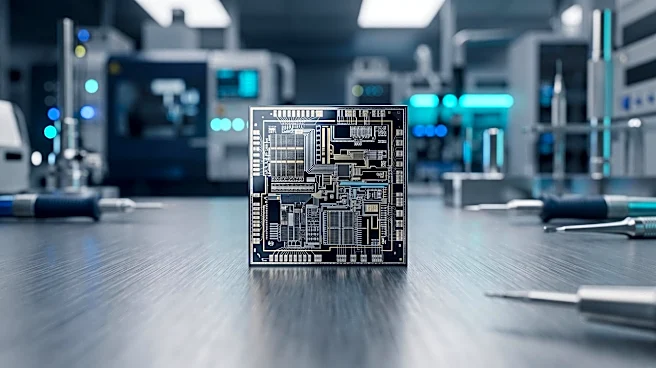
took place during the 'Innovator of the Year' gala in Bonn. The Elmos QRNG utilizes quantum physics effects to generate truly random numbers, which are crucial for cryptographic applications to secure data and digital communications. The technology is implemented on a single 2x2-mm chip but can also be integrated as IP into various CMOS platforms. This design makes the QRNG suitable for applications requiring high security, limited space, and low power consumption, such as in the automotive industry, communications, and the Internet of Things (IoT). Dr. Jan Dienstuhl, Chief Sales Officer at Elmos Semiconductor SE, highlighted that these awards confirm the innovative potential of their quantum-based technology and its future contribution to protecting digital systems.
Why It's Important?
The recognition of Elmos Semiconductor SE's QRNG as 'European Innovator 2026' underscores the growing importance of quantum technology in enhancing cybersecurity and data protection. As digital systems become increasingly complex and interconnected, the need for truly random numbers in cryptography is paramount to prevent sophisticated cyber threats. The integration of QRNG into various CMOS platforms, including automotive, communications, and IoT solutions, signifies a significant step towards more secure digital infrastructure across multiple sectors. This development could lead to more robust encryption methods, safeguarding sensitive information and critical communications from potential breaches. For U.S. industries, particularly those involved in automotive technology, telecommunications, and IoT, the availability of such advanced security components could influence future product development and security standards, potentially setting new benchmarks for data integrity and privacy. The emphasis on low power consumption and small form factor also makes this technology highly adaptable for widespread deployment, impacting the overall security landscape of digital ecosystems.
What's Next?
The continued recognition of Elmos' QRNG technology suggests a trajectory towards broader adoption and integration into various high-security applications. The company's focus on making the QRNG available as IP for CMOS platforms indicates a strategy to embed this advanced security feature directly into a wide range of electronic devices. This could lead to increased collaboration with manufacturers in the automotive, communications, and IoT sectors to incorporate quantum-based random number generation into their next-generation products. Future developments may include further miniaturization, enhanced performance, and expanded compatibility with different hardware architectures. The support from governmental bodies, such as the Federal Ministry for Economic Affairs and Energy under the IPCEI MECT initiative, also points to sustained investment and research in quantum technologies, which could accelerate their commercialization and impact on global cybersecurity standards. As quantum computing advances, the demand for quantum-safe cryptographic solutions like QRNGs is expected to grow, driving further innovation and market penetration.
Beyond the Headlines
The success of Elmos' QRNG highlights a broader trend in the technology sector: the convergence of semiconductor engineering with quantum physics to address critical challenges. This development is not merely about creating a more secure random number generator; it represents a foundational shift in how digital security is conceived and implemented. The ethical implications of such powerful cryptographic tools are significant, as they can both protect privacy and potentially be misused if not governed properly. Legally, the widespread adoption of quantum-safe encryption could necessitate updates to data protection regulations and international standards to ensure interoperability and compliance. Culturally, as quantum technology becomes more integrated into everyday devices, public awareness and understanding of its benefits and risks will become increasingly important. This innovation also underscores the strategic importance of national and international initiatives, like IPCEI MECT, in fostering technological leadership and securing critical digital infrastructures against future threats, including those posed by quantum computing itself.