




What's Happening?
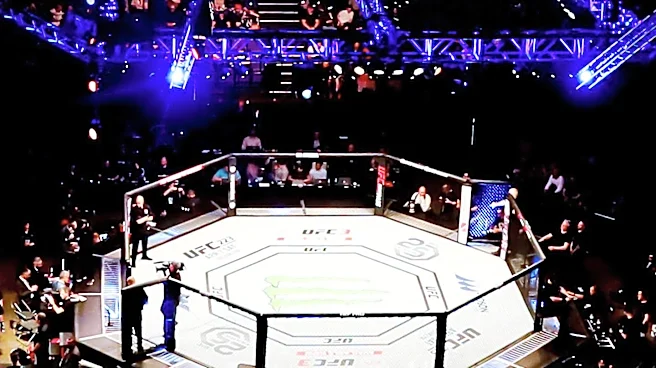
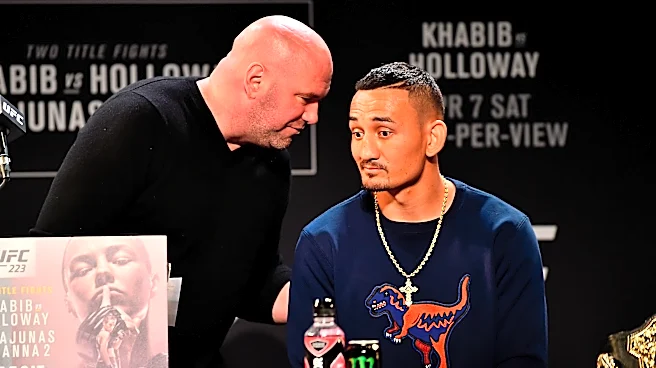
UFC CEO Dana White has indicated that hosting an event in Hawaii is a key priority for the promotion before he steps down. White stated that Hawaii has been one of the UFC's biggest markets since day one, despite never having hosted an event there due
to infrastructure limitations. This situation is set to change with the construction of a new arena in Halawa, Oahu, which is expected to be completed in 2028 or 2029 and will have a capacity of at least 31,000 fans. White expressed his enthusiasm for a Hawaiian event, noting the region's strong connection to MMA, having produced multiple world champions like Max Holloway and B.J. Penn. The exact timing of the event remains unclear, as it depends on the arena's completion and the overall state of the UFC and MMA at that time.
Why It's Important?
Bringing a UFC event to Hawaii holds significant importance for both the promotion and the local community. For the UFC, it fulfills a long-standing goal of tapping into a passionate and historically significant market that has contributed greatly to the sport's talent pool. This move could further expand the UFC's global footprint and fan base, aligning with White's ambition to host events in every major market worldwide. For Hawaii, a UFC event would be a major economic and cultural boon, attracting tourists, generating revenue, and providing a platform to celebrate local fighters and the state's rich martial arts heritage. The construction of the New Aloha Stadium is a critical enabler for this, highlighting the impact of infrastructure development on attracting major sporting events and boosting local economies. The event would also serve as an inspiration for the next generation of Hawaiian athletes.
What's Next?
The immediate next step for a UFC event in Hawaii hinges on the completion of the New Aloha Stadium in Halawa, Oahu, which is projected for 2028 or 2029. Once the arena is ready, the UFC will likely begin planning the event, determining whether it will be a Fight Night or a numbered pay-per-view. Dana White's commitment suggests that the promotion will prioritize making this event a reality as soon as feasible. Local stakeholders, including government officials and tourism boards, will likely collaborate with the UFC to ensure a successful launch, given the potential economic benefits. Fans in Hawaii and globally will anticipate further announcements regarding the event's date, fight card, and ticket sales once the arena's construction progresses. The success of this event could also pave the way for future major sporting and entertainment events in the new venue.
Beyond the Headlines
The pursuit of a UFC event in Hawaii reflects a broader trend in professional sports to expand into underserved but passionate markets. This strategy not only generates new revenue streams but also strengthens the emotional connection between the sport and its global audience. The emphasis on Hawaii's historical contribution to MMA, particularly in producing champions, underscores the cultural significance of local talent development. This move could inspire increased investment in local sports programs and infrastructure, fostering a new generation of athletes. Furthermore, the logistical challenges of hosting a major event in an island state, and the need for new infrastructure like the New Aloha Stadium, highlight the complex interplay between sports, urban planning, and economic development. The eventual event will be more than just a fight card; it will be a celebration of Hawaiian martial arts culture and a testament to the UFC's global reach.