





What's Happening?
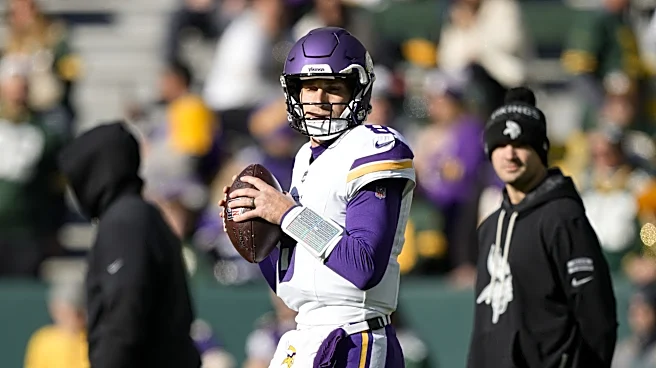
The Minnesota Vikings are implementing a player rotation strategy for their upcoming Week 11 game in Mexico City to mitigate the effects of high altitude. Unlike the San Francisco 49ers, who are spending the week in Colorado to acclimate, the Vikings will
not be undertaking a similar pre-game altitude adjustment. Vikings defensive coordinator Brian Flores stated that the team's staff is actively planning to rotate players throughout the game, ensuring that all players are prepared to contribute. Flores acknowledged the taxing nature of playing in Mexico City due to reduced oxygen levels and emphasized that players would not be expected to endure extended play sequences. The team aims to manage player fatigue and maintain performance by strategically substituting players in and out of the game. This approach highlights the unique challenges presented by the playing conditions in Mexico City.
Why It's Important?
This strategic decision by the Vikings carries significant implications for player performance and game outcome. The high altitude in Mexico City, which results in less available oxygen, can severely impact athletes' stamina and recovery. By opting for player rotation instead of pre-game acclimatization, the Vikings are betting on their depth and coaching staff's ability to manage player fatigue in real-time. This approach could either prove to be a shrewd tactical move, allowing them to maintain a high level of play throughout the game, or it could backfire if players struggle to adapt on the fly. The contrast with the 49ers' acclimatization strategy sets up a direct comparison of effectiveness, potentially influencing future team preparations for high-altitude games. The success or failure of the Vikings' plan could establish a new precedent for how NFL teams approach international games played in challenging environmental conditions.
What's Next?
The immediate next step is the Week 11 game in Mexico City, where the effectiveness of the Vikings' player rotation strategy will be put to the test. Observers will closely monitor player endurance, performance levels, and any visible signs of fatigue compared to their opponents, the 49ers, who chose a different acclimatization method. Post-game analysis will likely focus on how well the Vikings' coaching staff managed substitutions and whether the rotation successfully mitigated the altitude's impact. Depending on the outcome, other NFL teams might either adopt similar in-game management strategies for high-altitude venues or reinforce the importance of pre-game acclimatization. The game will serve as a practical case study for sports science and team management in extreme environmental conditions, potentially shaping future training and game-day protocols for international matchups.
Beyond the Headlines
The Vikings' decision to manage altitude through in-game player rotation rather than pre-game acclimatization touches upon broader discussions in professional sports regarding player welfare, performance optimization, and strategic resource allocation. This approach challenges the conventional wisdom that extensive pre-game acclimatization is the only effective method for high-altitude play. It raises questions about the physiological adaptability of elite athletes and the role of real-time coaching adjustments in mitigating environmental stressors. Furthermore, it highlights the increasing complexity of sports science, where teams must weigh various factors—logistics, player comfort, and potential competitive advantages—when preparing for unique game conditions. The outcome could influence how sports organizations view short-term physiological adaptations versus prolonged environmental exposure, potentially leading to new research and training methodologies in sports medicine and performance psychology.