









What's Happening?
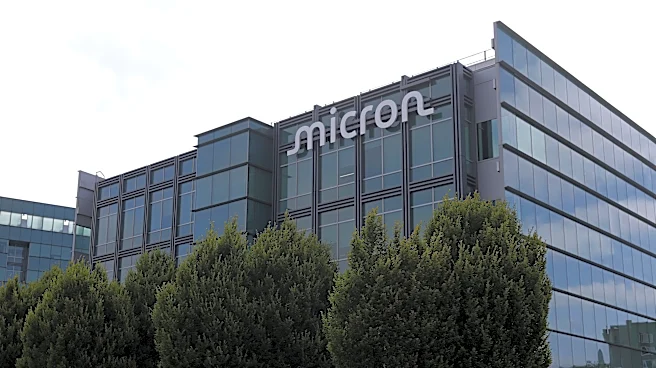
Micron Technology, a prominent memory manufacturer, has reported a significant increase in profits, driven by the rising demand for AI-related computing power. According to its latest financial report, Micron achieved a net profit of $28.24 billion in a single
quarter, a substantial increase from $1.89 billion in the same period last year. This surge in profitability has been attributed to the company's strategic shift towards high-bandwidth memory (HBM) production, which is essential for AI and high-performance computing applications. The company's stock price rose nearly 16% following the report, reflecting investor confidence in its future prospects. Micron has also secured long-term agreements with major customers, ensuring stable revenue streams and reducing the volatility traditionally associated with the memory market. These agreements cover a significant portion of Micron's production capacity, further solidifying its position in the industry.
Why It's Important?
The developments at Micron Technology highlight a significant shift in the semiconductor industry, where memory manufacturers are increasingly becoming integral to the AI and high-performance computing sectors. This shift is transforming the memory market from a cyclical business to a more stable and strategic infrastructure. The increased demand for HBM is causing a shortage in general-purpose memory, leading to price hikes that impact various industries, including consumer electronics and automotive. As memory becomes a critical component in AI applications, companies like Micron are poised to benefit from long-term growth opportunities. However, the rising costs of memory are also affecting smartphone manufacturers, leading to increased production costs and potential price hikes for consumers. This situation underscores the broader economic implications of technological advancements and the interconnectedness of global supply chains.
What's Next?
Micron's strategic focus on HBM and long-term customer agreements suggests a continued emphasis on securing its position in the AI and high-performance computing markets. The company is likely to invest further in advanced production capabilities to meet the growing demand for high-performance memory. Meanwhile, the broader semiconductor industry may experience further consolidation as companies seek to align their production capacities with emerging technological trends. For smartphone manufacturers and other industries reliant on memory components, the challenge will be to manage rising costs while maintaining competitive pricing. This could lead to shifts in product offerings and pricing strategies as companies adapt to the new market dynamics.
Beyond the Headlines
The transformation of the memory market has broader implications for technological innovation and economic policy. As memory becomes a critical component in AI and computing, there may be increased scrutiny on supply chain dependencies and the geopolitical aspects of semiconductor production. The strategic importance of memory manufacturing could lead to policy interventions aimed at securing domestic production capabilities and reducing reliance on foreign suppliers. Additionally, the environmental impact of increased semiconductor production may become a focal point for sustainability initiatives within the industry.