







What's Happening?
Lucid Group, an electric vehicle manufacturer, is navigating significant financial hurdles and a leadership change. The company reported a net loss of approximately $3.7 billion in FY 2025, despite a 68% revenue increase to $1.35 billion. This indicates
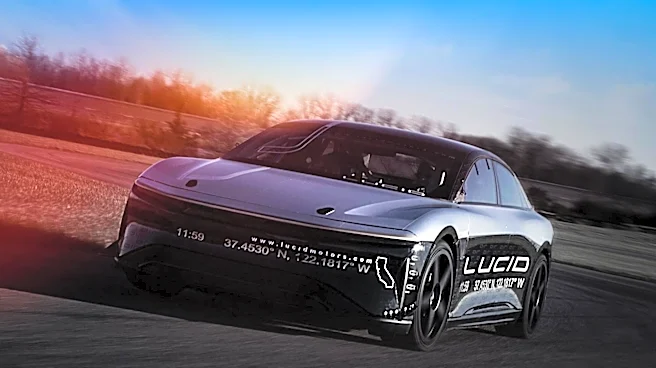
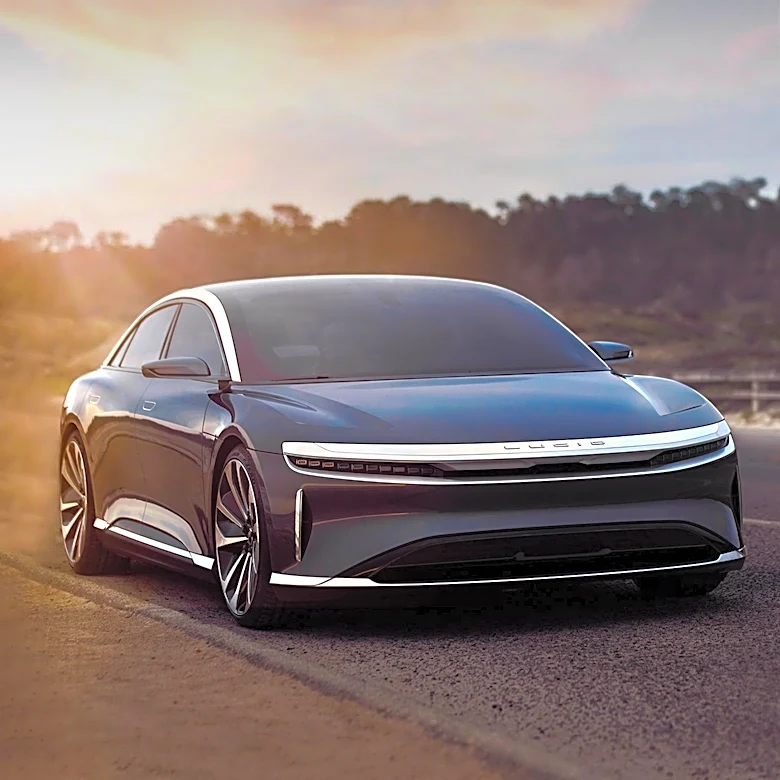
that the costs associated with manufacturing and technology development are substantially higher than current sales. Lucid's business model focuses on high-performance electric vehicles, including the Lucid Air sedan and the Gravity SUV, sold directly through its retail stores. A key commercial agreement with the government of Saudi Arabia commits to purchasing up to 100,000 vehicles over ten years, which introduces a layer of risk due to customer concentration. The company is also defending itself against shareholder lawsuits alleging misleading information regarding supplier quality and delivery schedules for the Gravity SUV. New CEO Silvio Napoli is tasked with addressing these operational and legal challenges, including improving customer service and parts availability.
Why It's Important?
Lucid Group's situation highlights the intense capital requirements and operational complexities within the electric vehicle industry, particularly for newer entrants. The substantial net loss and high debt-to-equity ratio (nearly 1.2x) signal significant financial strain, which could impact its ability to scale production and compete effectively. The reliance on a single major customer, the Saudi Arabian government, creates a concentrated risk profile; any changes in this agreement could severely affect Lucid's revenue stream. Furthermore, shareholder lawsuits and the transition to a new CEO during a critical growth phase can undermine investor confidence and operational stability. For the broader U.S. automotive market, Lucid's struggles underscore the challenges faced by EV startups in establishing profitability and market share against established luxury brands and other EV competitors, influencing investment trends and consumer perceptions of emerging EV companies.
What's Next?
Lucid Group's new CEO, Silvio Napoli, has outlined plans to address operational inefficiencies and improve customer satisfaction. The company intends to increase the number of technicians and dedicated staff supporting customers by 35% and mobile service capacity by over 20%. These measures, along with improvements in parts availability, are expected to reduce customer wait times by more than 30%. While the company is optimistic about the long-term prospects of the robotaxi market, it anticipates slower sales in the near term, with Wall Street projecting revenue to increase to approximately $1.5 billion and a narrowing net loss of $800 million for the current year. The outcome of the shareholder lawsuits and the successful execution of Napoli's strategic changes will be crucial in determining Lucid's future trajectory and its ability to achieve sustainable profitability.
Beyond the Headlines
Lucid Group's challenges extend beyond immediate financial and operational concerns, touching upon broader themes in the automotive industry. The company's struggle to achieve profitability despite significant revenue growth reflects the inherent difficulties in scaling high-tech manufacturing and establishing a new brand in a competitive market. The legal battles and leadership changes also highlight the importance of transparent communication and robust corporate governance in attracting and retaining investor trust. Furthermore, Lucid's focus on the ultra-luxury EV segment, while offering high margins, also exposes it to the volatility of high-net-worth consumer spending and the increasing competition from both traditional luxury automakers and other EV players. The company's long-term success will depend not only on its technological innovation but also on its ability to build a resilient business model and effectively manage stakeholder expectations in a rapidly evolving industry.