

What's Happening?
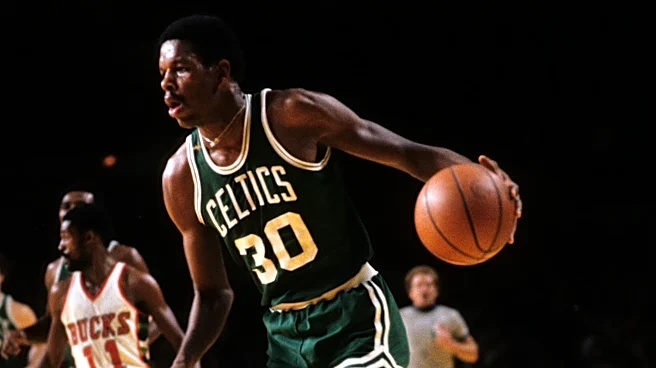
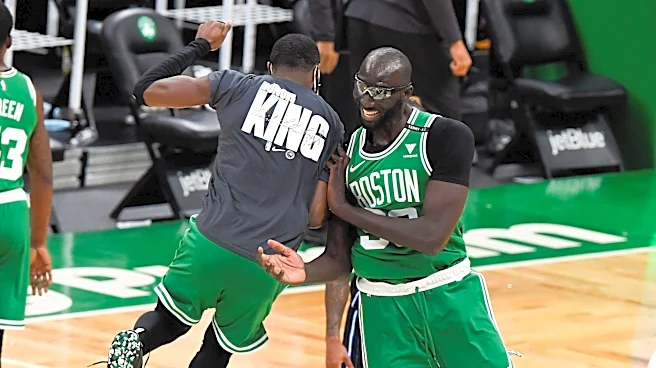
NBA legend Shaquille O'Neal's final season with the Boston Celtics in 2010 has become a widely recognized meme symbolizing a player being 'washed' or past their prime. O'Neal, who joined the Celtics at 38 years old, averaged career lows of 9.2 points,
4.8 rebounds, and 1.1 blocks in 37 games. This performance was a stark contrast to his dominant career with the Orlando Magic, Los Angeles Lakers, and Miami Heat, where he earned MVP awards and multiple championships. Despite starting most games for a 56-win Celtics team and shooting a career-high 66.7% from the field, his limited availability due to knee and Achilles injuries contributed to the perception of his decline. The meme gained further traction when NFL quarterback Kirk Cousins referenced O'Neal's late-career stops with the Suns and Celtics as an example of how he didn't want to end his own career, to which O'Neal reportedly agreed. While O'Neal's time in Boston was statistically better than often remembered, the narrative of his decline has overshadowed the nuances of his performance and injury struggles.
Why It's Important?
This phenomenon is important as it illustrates how public perception and meme culture can shape the legacy of even the most iconic athletes. For Shaquille O'Neal, one of the most dominant players in NBA history, his final season has been distilled into a symbol of decline, often overshadowing his immense achievements. This impacts how younger generations might view his career, focusing on the end rather than the peak. It also highlights the unforgiving nature of professional sports, where even legends are not immune to the physical toll of aging and injuries. The 'Celtics Shaq' meme serves as a cultural shorthand for the inevitable decline of athletic prowess, resonating with fans across different sports. Furthermore, it underscores the challenge athletes face in managing their careers' twilight, often struggling with the decision of when to retire to preserve their legacy. The meme's prevalence reflects a broader societal tendency to simplify complex narratives, sometimes at the expense of historical accuracy or context.
What's Next?
The 'Celtics Shaq' meme is likely to persist as a cultural reference point for athletic decline, continuing to be used in discussions about aging athletes across various sports. For Shaquille O'Neal, his post-playing career as a media personality allows him to occasionally address or humorously acknowledge the meme, potentially shaping its future interpretation. However, the core meaning of the meme is unlikely to change significantly. Future athletes approaching the end of their careers may continue to be compared to 'Celtics Shaq' if their performance declines sharply or they struggle with injuries in their final seasons. This ongoing cultural reference will serve as a reminder of the physical demands of professional sports and the difficulty of maintaining peak performance into later years. The meme's longevity also suggests that once a narrative takes hold in popular culture, it can be challenging to alter, even with factual counter-arguments about performance nuances.
Beyond the Headlines
Beyond the immediate sports context, the 'Celtics Shaq' meme touches on deeper themes of legacy, memory, and the human condition. It reflects how collective memory often prioritizes dramatic narratives—like the fall of a titan—over nuanced realities. This phenomenon isn't unique to sports; it's a common way societies process the careers of public figures. Ethically, it raises questions about fairness in historical representation: should an entire career be judged by its final, less glorious chapter? Psychologically, it speaks to the human fascination with decline and mortality, as even the most powerful figures eventually succumb to age. Culturally, the meme's virality demonstrates the power of digital media to distill complex histories into easily digestible, often oversimplified, symbols. It also highlights the pressure on athletes to retire at their peak, to avoid becoming a 'Celtics Shaq' figure, thus influencing career decisions beyond just physical capability. This cultural artifact serves as a poignant reminder of the transient nature of physical greatness and the enduring power of narrative in shaping public perception.