







What's Happening?
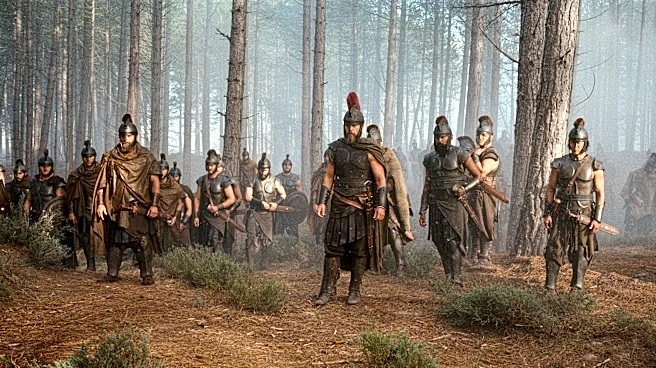
Christopher Nolan, the director of the upcoming film 'The Odyssey,' has articulated his vision to present the ancient world in a way that feels fresh and accessible to modern audiences. In a recent interview, Nolan discussed his approach to adapting Homer's
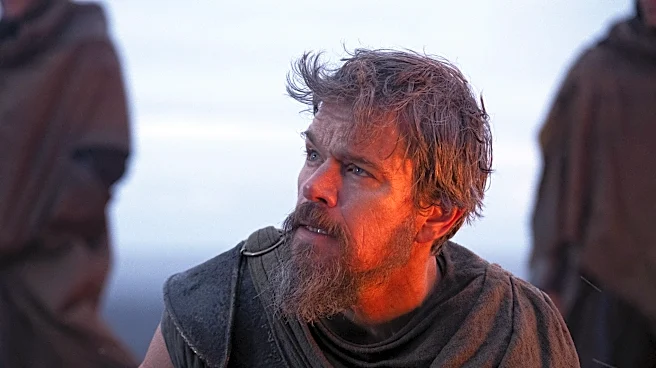
epic, emphasizing the need to move away from cultural prejudices that elevate the ancient world simply because it is old. He aims to create a world that is grounded and relatable, using contemporary dialogue and familiar faces to help audiences connect with the mythological story. The film features a star-studded cast, including Tom Holland as Telemachus, Matt Damon as Odysseus, and Zendaya as Athena. Nolan's approach has sparked debate, particularly regarding historical accuracy, but he defends his choices as a means to make the story more engaging and relevant.
Why It's Important?
Nolan's reinterpretation of 'The Odyssey' is significant as it challenges traditional perceptions of historical epics, which are often seen as formal and distant. By using contemporary language and casting well-known actors, Nolan seeks to bridge the gap between ancient myths and modern audiences, potentially broadening the appeal of classical stories. This approach could influence future adaptations of historical and mythological narratives, encouraging filmmakers to prioritize relatability over strict historical accuracy. The film's release could also spark discussions about how cultural prejudices shape our understanding of history and the arts, prompting a reevaluation of how ancient stories are told and perceived.
What's Next?
As 'The Odyssey' approaches its release date on July 17, 2026, it is likely to generate further discussion and critique, particularly from historians and purists who may question the film's historical liberties. The reception of the film will be closely watched, as it could set a precedent for how ancient stories are adapted in the future. If successful, Nolan's approach may inspire other filmmakers to adopt similar strategies, potentially leading to a new wave of historical films that prioritize accessibility and engagement. The film's performance at the box office and its critical reception will be key indicators of its impact on the industry.